
How to Build an Automated Morning Business Report?
Why Are Automated Morning Business Reports Essential?
In today’s fast-moving business environment, having timely and clear information first thing in the morning is a game-changer. Leaders—from small business owners to department heads—need quick access to their organization’s key metrics, risks, and opportunities to start the day with confidence.
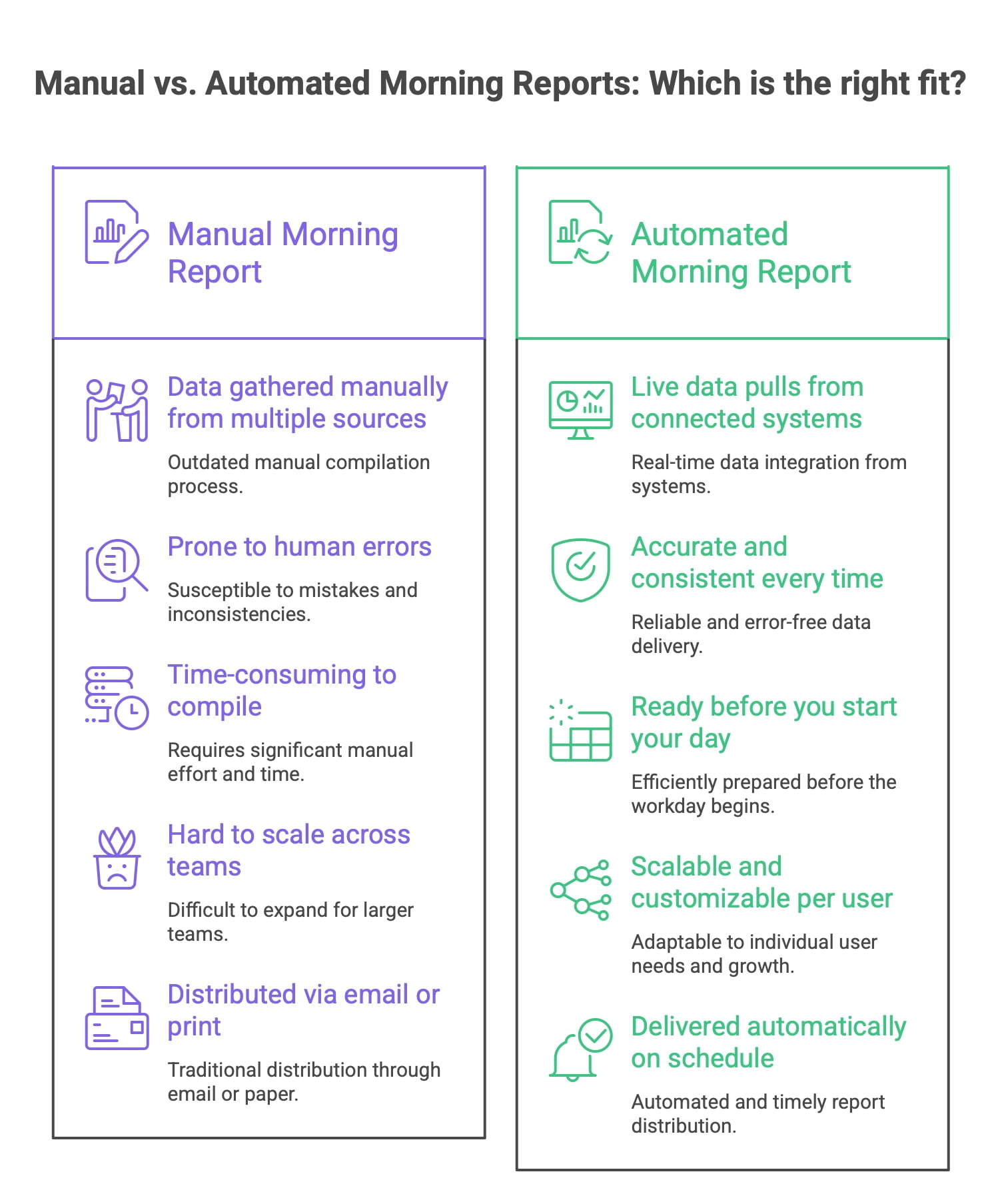
Traditionally, creating morning business reports meant manually gathering data from various sources, cleaning it, analyzing it, and then preparing summaries. This process is slow, prone to errors, and ties up valuable time. Automation changes the game by delivering accurate, consistent, and up-to-date reports every morning without manual effort van Dijk, 2024.
Automated reports don’t just save time; they empower decision-makers to spot trends early and respond quickly. By connecting live data, applying business rules, and using well-designed templates, these reports provide clear, actionable insights tailored to each stakeholder’s needs SkhokhoAI, 2025. This article explains what your automated morning business report should include and how to build one that truly supports your daily decisions.
What Are the Key Components of an Automated Morning Business Report?
Building an automated report involves combining technology, data, and design into a seamless workflow. Here’s what you need to know about the core elements:
1. Data Integration: Connecting Your Sources
Your report starts with live connections to data sources like spreadsheets, databases, APIs, or business apps. These connections ensure your report always uses the latest information without manual updates van Dijk, 2024.
2. Data Transformation: Cleaning and Calculating Metrics
Raw data is rarely ready to use. It needs to be cleaned, filtered, combined, and transformed into meaningful metrics and KPIs (key performance indicators). This step guarantees that your report reflects accurate and consistent numbers.
3. Report Template Design: Clear and Actionable Layouts
Templates define how your data appears—charts, tables, text summaries, and branding. A well-designed template ensures information is easy to scan and understand quickly.
4. Automation Logic: Scheduling and Triggers
Automation rules decide when and how reports are generated—whether every morning on a fixed schedule, on demand, or triggered by specific events or thresholds van Dijk, 2024.
5. Output and Distribution: Delivering Reports Efficiently
Reports can be sent as PDFs, emails, embedded dashboards, or saved in file repositories with access controls. This guarantees that the right people get the right information at the right time.
Why Data Quality and User Trust Matter
Automation depends heavily on the quality of your source data. Without proper validation and cleaning, errors can multiply and lead to misleading conclusions. Integration can be tricky, especially with older systems lacking modern APIs, often requiring extra engineering effort van Dijk, 2024.
User adoption is another challenge. Stakeholders used to manual reports may need training and governance to trust and use automated reports effectively.
What Content Should Your Automated Morning Business Report Include?
Your report’s value comes from the right content, presented clearly and concisely. The goal is a “daily briefing” that highlights what matters most for quick decision-making SkhokhoAI, 2025.
Typical Sections in a Morning Report
- Business Opportunities: Top 15 prospects or leads worth attention.
- Risk Analysis: Top 3 emerging risks or issues.
- Industry Events: Top 3 events that could impact your business.
- Industry News: Top 3 relevant news items.
- Regulatory Compliance: Top 3 compliance updates or alerts.
Each section should be easily scannable, enabling a one-read overview that highlights actionable insights.
How to Choose the Right KPIs and Metrics
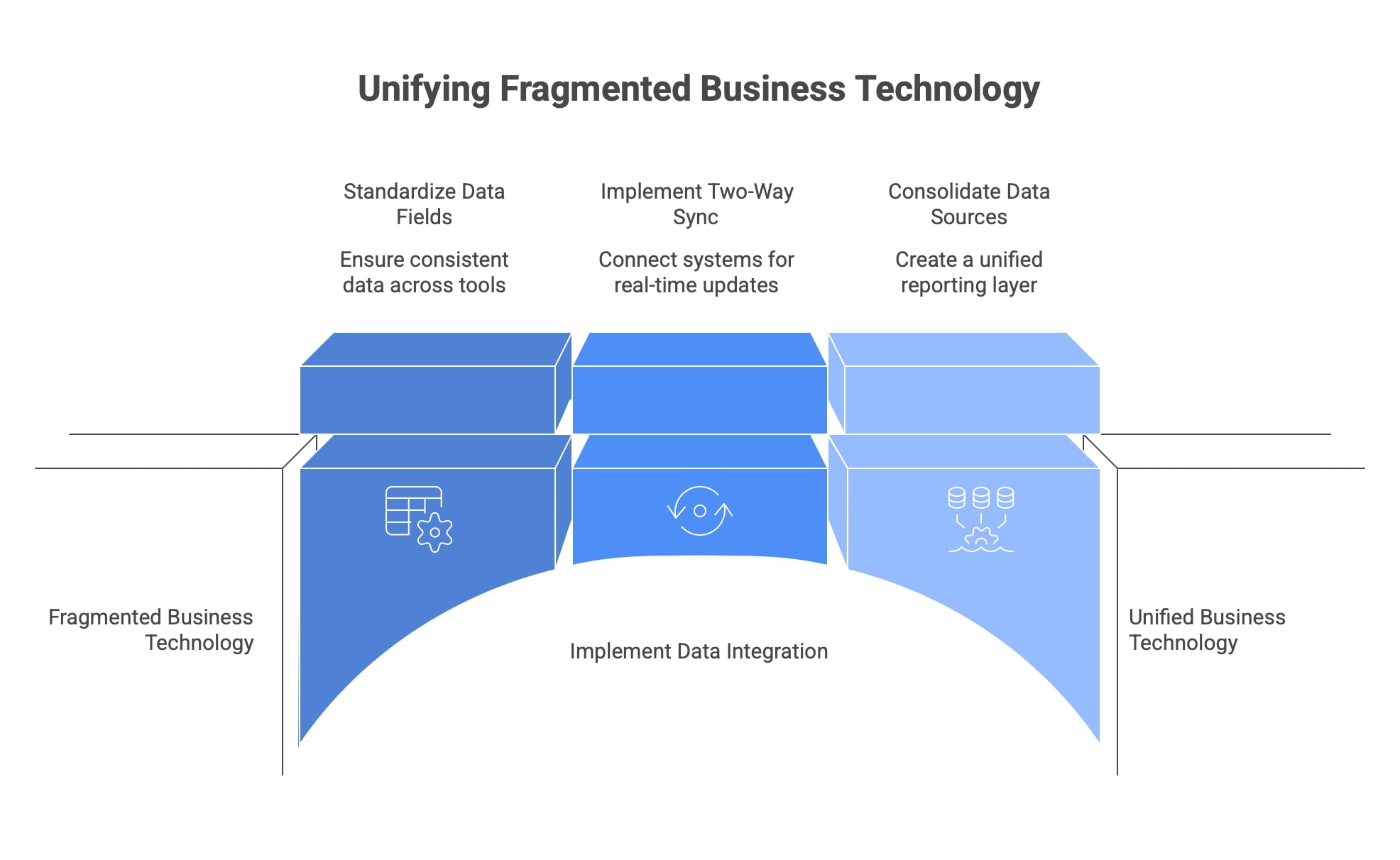
Work closely with your team to identify the key indicators that drive your business decisions. Your data environment must support live updates, integrating multiple sources into a unified, reliable view IBM Institute for Business Value, 2025.
Disconnected or fragmented technology is a common barrier—half of CEOs report this as a major challenge to getting cross-functional insights IBM Institute for Business Value, 2025.
How Can AI Enhance Your Morning Report?
AI agents can analyze business context, scan external sources, filter relevant information, and automate delivery, making your reports timely and even predictive instead of just retrospective SkhokhoAI, 2025.
However, it’s vital to include validation and monitoring to ensure AI-generated insights are accurate and trustworthy. Unverified AI outputs could lead to poor decisions IBM Institute for Business Value, 2025.
How Should Reports Link to Decision-Making?
Your report should clearly connect insights to actions. For example, a high-risk alert on revenue should prompt immediate escalation, while a low-risk reputational issue might just require monitoring Warin, 2024.
Treat your morning report as a living document—regularly updated and refined to stay relevant and impactful Warin, 2024.
How Do You Build the Technical Architecture for Automated Reports?
Creating a reliable automated report requires a well-planned system architecture and the right tools.
Mapping Your Workflow
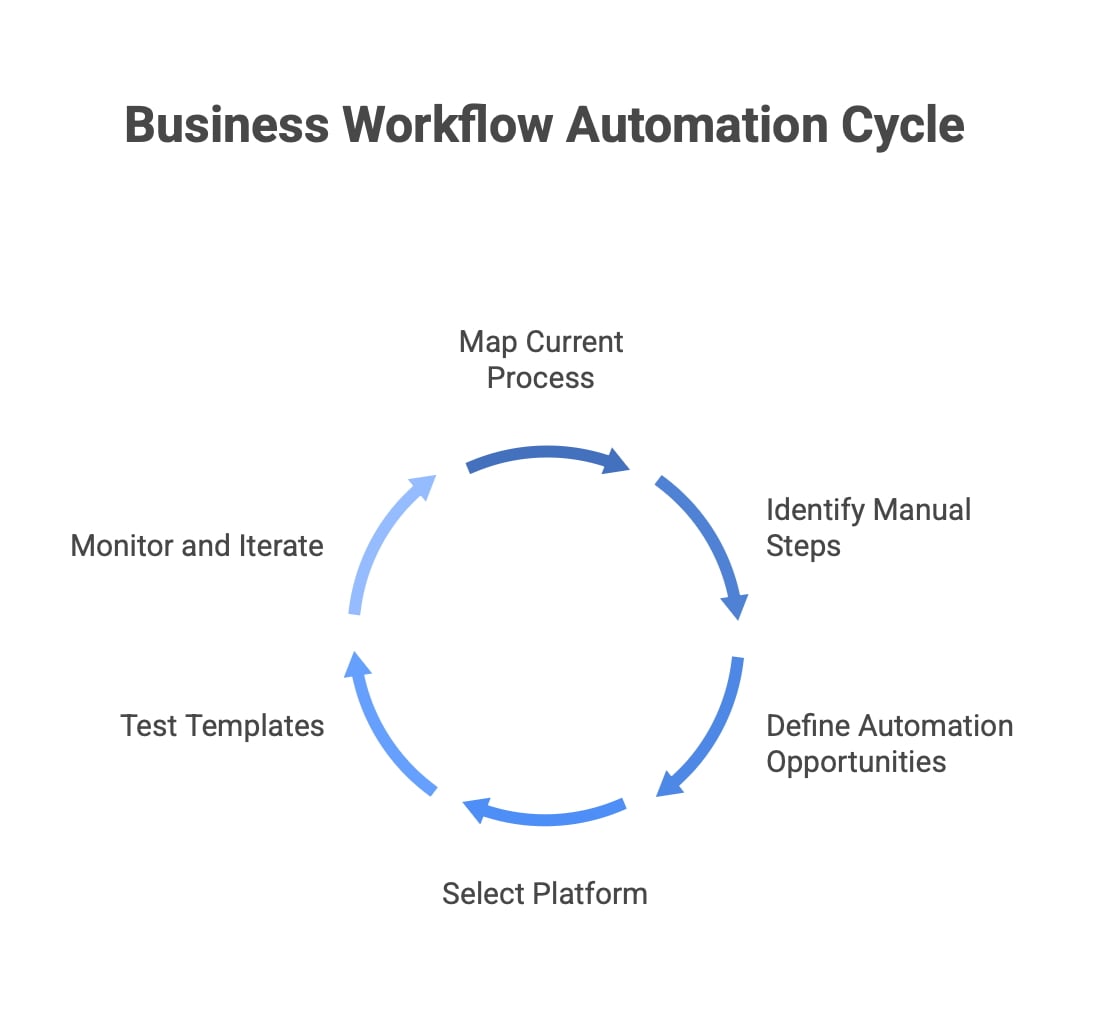
Start by mapping your entire reporting process. Identify manual steps, spreadsheet handoffs, and delays. This shows where automation can deliver the biggest efficiency gains Yuen, 2025.
Choosing the Right Platform
Options vary depending on your needs:
- Unified Platforms: Centralize project, financial, and customer data.
- Hub-and-Spoke Models: Connect core systems with specialized tools.
- Two-Way Sync: Integrate accounting and payment processors for seamless data flow Yuen, 2025.
Your system should include:
- Standardized field names and data ownership rules.
- Role-based access controls so users see only relevant data.
- Automation rules (like IF-THEN triggers) for routine tasks.
Selecting Reporting Tools
- For polished, branded static reports (PDFs), use report servers like Datylon Report Server, which centralizes template control and batch delivery van Dijk, 2024.
- For interactive, self-service dashboards, choose BI tools like Tableau, Power BI, or Looker Studio, which let users explore live data Pollitt, 2026.
- For custom data transformations, coding with Python or R offers full flexibility Pollitt, 2026.
Managing Integration Complexity and Security
Legacy systems and inconsistent data formats can complicate integration. Middleware solutions (integration platforms as a service, or iPaaS) help manage data transformation, retries, and error logging Yuen, 2025.
Security is critical. Use encryption, role-based access, and regular security checks to protect sensitive business data, especially for small and mid-size businesses Fujifilm, 2025.
What Are Best Practices for Implementing and Governing Automated Reports?
Successful automation is an ongoing process, not a one-off project. Here’s how to get it right:
Define Clear Objectives and KPIs
Start by agreeing on what you want to track and who needs which reports Martinez, 2024.
Ensure Data Quality
Use data preparation tools to validate and clean data before it feeds into reports. This prevents bias and errors Martinez, 2024.
Test Templates with Real Data
Before going live, test your report templates thoroughly to ensure calculations and formatting are correct Martinez, 2024.
Set Up Automation and Distribution
Configure scheduling, on-demand exports, or event triggers. Choose distribution channels that fit your stakeholders’ preferences, such as email or dashboards van Dijk, 2024.
Establish Governance and Accountability
Assign ownership for each report cadence. Define who interprets alerts, who reviews summaries, and who validates strategic reports Alghamdi et al., 2025.
Avoid Common Pitfalls
- Don’t automate before ensuring data quality.
- Avoid over-automation that doesn’t align with actual workflows.
- Provide training and change management to prevent tool abandonment Yuen, 2025.
Measure and Iterate
Track metrics like report turnaround time, accuracy, user engagement, and how insights influence decisions. Use this feedback to refine your reports continuously Martinez, 2024.
How Can Automated Morning Reports Transform Your Business?
Automated morning business reports are more than just a time-saver—they are a strategic advantage. They deliver consistent, accurate, and actionable intelligence that helps your organization act faster and smarter van Dijk, 2024.
By focusing on strong data integration, clear content, the right technology, and solid governance, you can build reports that keep your team informed and aligned every day SkhokhoAI, 2025.
This shift from manual to automated reporting boosts agility and confidence, helping you stay ahead in a competitive landscape IBM Institute for Business Value, 2025.
Automate your morning business report thoughtfully, and you’ll gain a powerful tool that not only informs but also drives meaningful action and growth.

| Manual Morning Business Report | Automated Morning Business Report |
|---|---|
| Data is gathered and compiled manually, often from multiple sources. | Data is pulled automatically from live sources like databases, APIs, or business apps. |
| Prone to errors, delays, and inconsistent updates. | Delivers accurate, consistent, and up-to-date information every morning. |
| Time-consuming process that ties up staff resources. | Saves time by eliminating repetitive manual tasks. |
| Difficult to scale and adapt to changing business needs. | Easily customizable with templates, automation logic, and integration of new data sources. |
| Distribution often relies on email attachments or printed copies. | Reports can be sent automatically as PDFs, emails, dashboards, or saved to secure repositories. |
Frequently Asked Questions
What should be included in an automated morning business report?
An automated morning business report should include business opportunities, risk analysis, industry events, industry news, and regulatory compliance updates, all presented in a clear and scannable format.
How do I ensure data quality in my automated reports?
Validate and clean all incoming data before it enters your reports, using data preparation tools to prevent errors and maintain trust.
What are the key steps to building an automated morning report?
Connect your data sources, transform and clean the data, design clear report templates, set automation rules for scheduling, and configure secure distribution to stakeholders.
Can AI improve my morning business reports, and how?
AI can analyze business context, scan external sources for relevant information, and automate report delivery, making your reports more timely and potentially predictive, but always include validation to ensure accuracy.
Is it true that automating reports means you no longer need to review them?
No, automated reports still require regular review and refinement to ensure content remains relevant, accurate, and aligned with business goals.