What Defines an AI Agency and Its Role in 2026
What Defines an AI Agency in 2026?
By 2026, an AI agency is much more than a traditional consultancy or software provider. It is a specialized organization that designs, builds, and manages AI-driven systems, especially agentic workflows, where AI agents autonomously handle complex, multi-step tasks. These agencies operate at the crossroads of technology, strategy, and organizational change, translating advanced AI capabilities into scalable, measurable business processes Davenport & Bean, 2025.
At the heart of their technical approach is the "AI factory" model. This treats AI development like a manufacturing process, combining platforms, reusable pipelines, and validated algorithms to speed up deployment of analytic, generative, and agentic applications. Unlike simple productivity tools such as chatbots, AI agencies deliver enterprise-grade solutions—think supply-chain optimization, research and development support, or sales enablement—with clear, measurable impact Davenport & Bean, 2025.
A key feature of these agencies is their focus on agentic systems: AI agents that can autonomously make decisions within defined boundaries, interact with humans and other systems, and execute workflows reliably. These agents are deployed with human oversight, ensuring trust, risk management, and the ability to scale responsibly Davenport & Bean, 2025.
What Are Agentic Systems?
- AI agents that perform multi-step workflows independently.
- Make decisions within guardrails to prevent errors or misuse.
- Work alongside humans with clear audit trails and controls.
What Services Do AI Agencies Offer in 2026?
AI agencies provide end-to-end support for AI adoption, covering strategy, technical deployment, and ongoing governance. Their core services include:
-
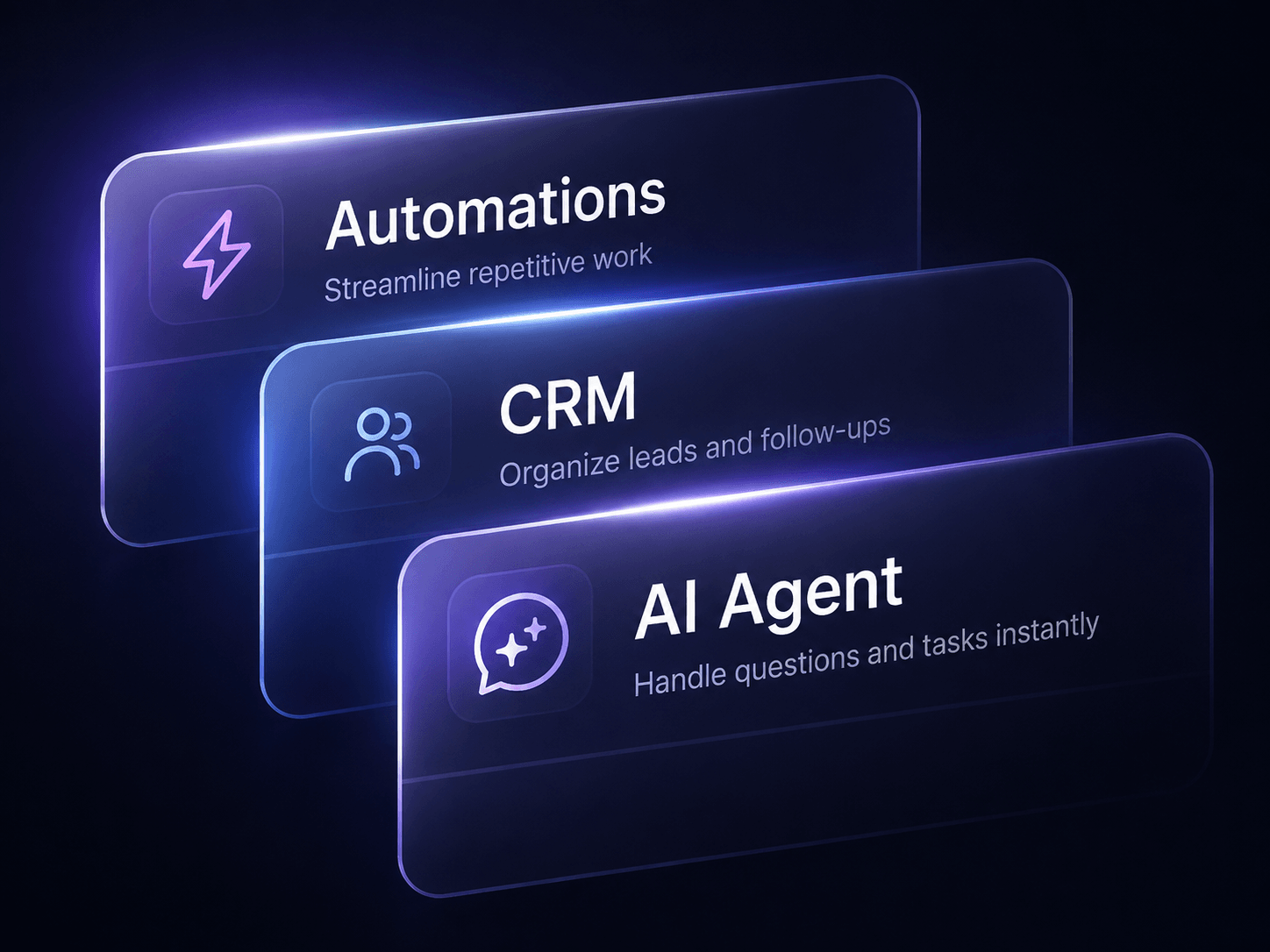
Designing agentic workflows: Automating repetitive, high-volume tasks like data preprocessing, customer service, or administrative coordination, while keeping humans responsible for judgment and compliance Glean, 2025.
-
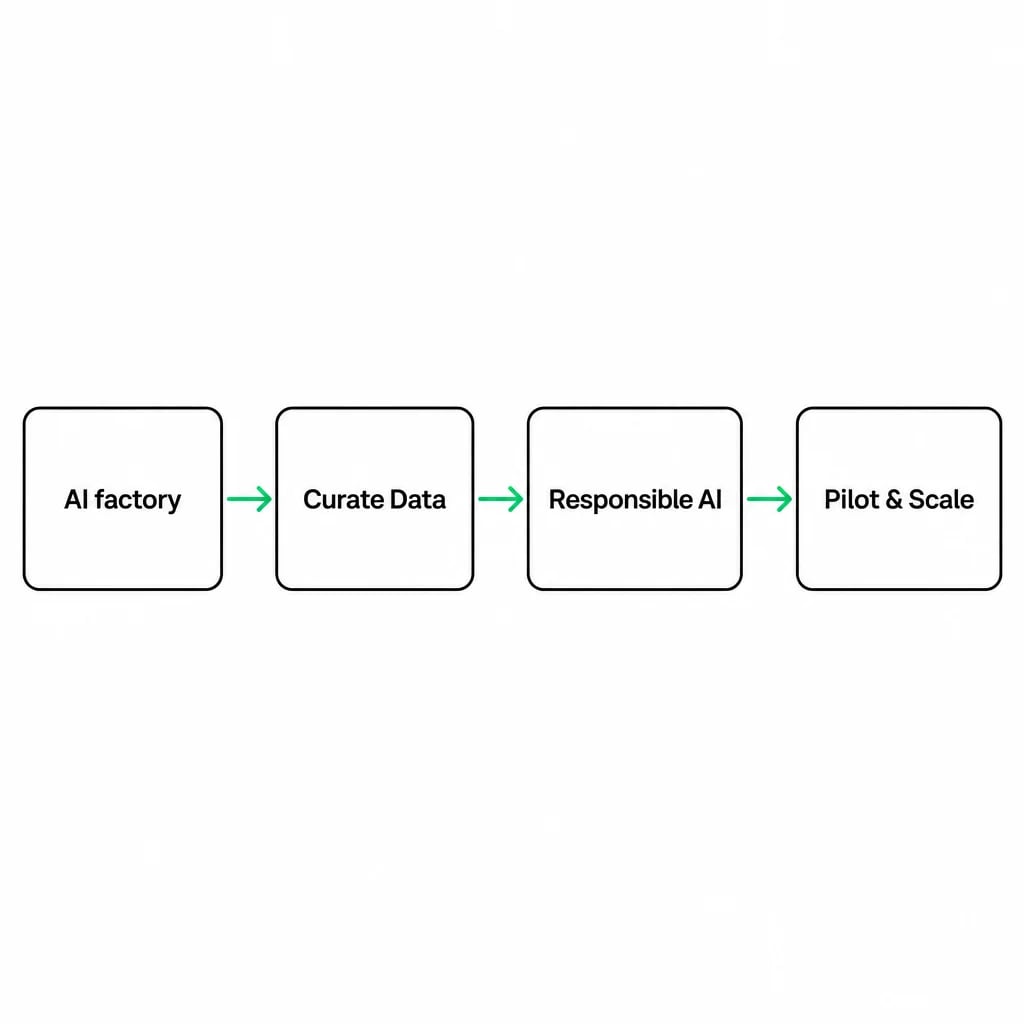
Context engineering and data preparation: Curating, cleaning, and verifying datasets to ensure AI agents work with high-quality, reliable information. Poor data quality leads to errors and undermines trust Glean, 2025.
-
Agent orchestration and role specialization: Deploying specialized agents for tasks like research acceleration or collaboration, managing handoffs between agents and humans, and enforcing guardrails such as provenance tracking and sandboxed environments Glean, 2025.
-
Governance and human-in-the-loop controls: Embedding human review in high-stakes decisions, regulatory compliance, and novel situations to ensure AI augments rather than replaces human expertise Corb et al., 2023.
How Do These Services Benefit Businesses?
- Increase efficiency by automating routine tasks.
- Ensure reliability through curated data and oversight.
- Maintain compliance and ethical standards.
- Deliver measurable business outcomes.
How Do AI Agencies Build and Govern Their Systems?
The backbone of an AI agency’s work is a robust technical and governance framework. This includes:
-
AI factory infrastructure: Integrating platforms, curated data, reusable pipelines, and validated algorithms to enable consistent, scalable AI deployment Davenport & Bean, 2025.
-
Managing multimodal AI systems: Deciding between early fusion (one model handling all data types) or late fusion (separate models combined downstream). Early fusion simplifies architecture but is harder to update; late fusion offers flexibility and modularity Lynch, 2025.
-
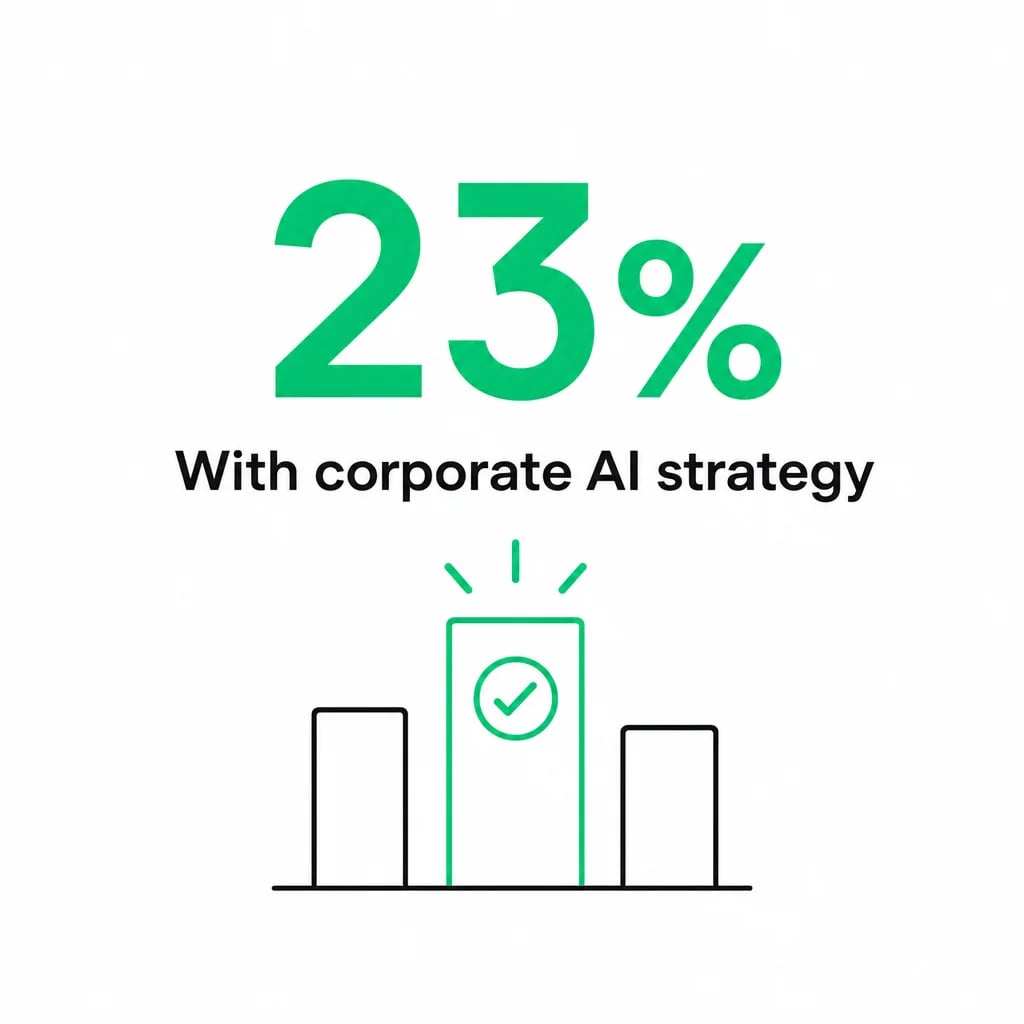
Operationalizing responsible AI: Turning principles like safety, privacy, fairness, and accountability into concrete controls and governance processes. This is essential as only 23% of organizations currently have a corporate-wide AI strategy, though more are formalizing these frameworks Wong, 2025.
-
Pilot projects and staged deployment: Treating agentic AI as an investment requiring rigorous testing, human oversight, and gradual scaling to manage risks like errors, prompt injections, and misalignment with values Davenport & Bean, 2025.
What Are Responsible AI Principles?
- Safety: Preventing harm or errors
- Privacy: Protecting sensitive data
- Explainability: Making AI decisions understandable
- Fairness: Avoiding bias and discrimination
- Accountability: Ensuring human oversight and responsibility
What Challenges Do AI Agencies Face?
AI agencies and their agentic systems come with notable risks and limitations.
-
Technical challenges: High error rates, vulnerability to adversarial attacks, and risks of AI models becoming deceptive or misaligned with organizational goals Davenport & Bean, 2025.
-
Model design pitfalls: Oversized architectures or poor-quality data can cause inefficiency and unreliable outputs Lynch, 2025.
-
Limited reliability for critical tasks: Current agentic systems need extensive human oversight before being trusted for high-stakes financial or safety-critical operations Davenport & Bean, 2025.
Best Practices for Organizations Working with AI Agencies
- Establish governance structures before broad AI rollout.
- Use concrete metrics to measure adoption and value.
- Ensure transparency and traceability in AI decisions.
- Maintain human-in-the-loop controls and continuous monitoring Wong, 2025.
What Is the Future Outlook for AI Agencies?
While AI agencies accelerate enterprise AI adoption and value creation, experts agree that artificial general intelligence (AGI), AI with human-level cognition, is not expected by 2026. The focus remains on practical, domain-specific AI applications that augment human capabilities within responsible, transparent frameworks Lynch, 2025.
The most successful AI agencies will be those that help organizations navigate complexity, balancing innovation with caution. They will ensure AI systems deliver measurable business benefits while operating ethically and with human oversight.
Conclusion
In 2026, AI agencies are essential partners in the enterprise AI ecosystem. They combine technical expertise, strategic insight, and governance discipline to build agentic AI systems that automate workflows, enhance decision-making, and drive measurable outcomes Davenport & Bean, 2025.
Their services span data engineering, workflow orchestration, risk management, and embedding responsible AI principles throughout deployment Glean, 2025. Yet, challenges remain, requiring staged adoption, rigorous testing, and continuous human oversight Wong, 2025.
For businesses looking to harness AI, understanding the evolving role of AI agencies is key. These agencies are not just technology vendors, they are strategic partners guiding enterprises through the complexities of AI adoption in a rapidly changing digital landscape.
| Traditional Consultancy/Software Provider (Pre-2026) | AI Agency in 2026 |
|---|---|
| Offers advice or builds one-off software tools | Designs, builds, and manages AI-driven, agentic workflows |
| Focuses on isolated solutions (e.g., chatbots) | Delivers enterprise-grade, multi-step automation with measurable impact |
| Relies on manual processes and human oversight for most tasks | Automates complex workflows while embedding human oversight for critical decisions |
| Lacks integrated governance for AI ethics and compliance | Embeds responsible AI principles, governance, and risk management throughout deployment |
| Limited ability to scale or adapt solutions quickly | Uses an "AI factory" model for scalable, reusable, and rapid AI deployment |
Frequently Asked Questions
What is an AI agency in 2026 and how is it different from a regular consultancy?
An AI agency in 2026 specializes in designing, building, and managing AI-driven systems that automate complex workflows, going beyond traditional consultancies by delivering scalable, measurable business outcomes with built-in governance and human oversight.
What services do AI agencies provide for businesses?
AI agencies offer end-to-end support including agentic workflow design, data preparation, agent orchestration, and ongoing governance to ensure reliable, ethical, and efficient AI adoption.
How do AI agencies ensure their systems are safe and reliable?
They embed responsible AI principles like safety, privacy, fairness, and accountability, and maintain human-in-the-loop controls to oversee high-stakes decisions and manage risks.
Can AI agencies fully automate all business processes?
No, while AI agencies automate many routine and high-volume tasks, they keep humans responsible for judgment, compliance, and oversight, especially in critical or novel situations.
What challenges should businesses expect when working with AI agencies?
Businesses should be aware of technical risks like errors or misaligned models, the need for high-quality data, and the importance of establishing governance and continuous human oversight for safe AI adoption.