5 Blind Spots That Leave My Automated Business Exposed
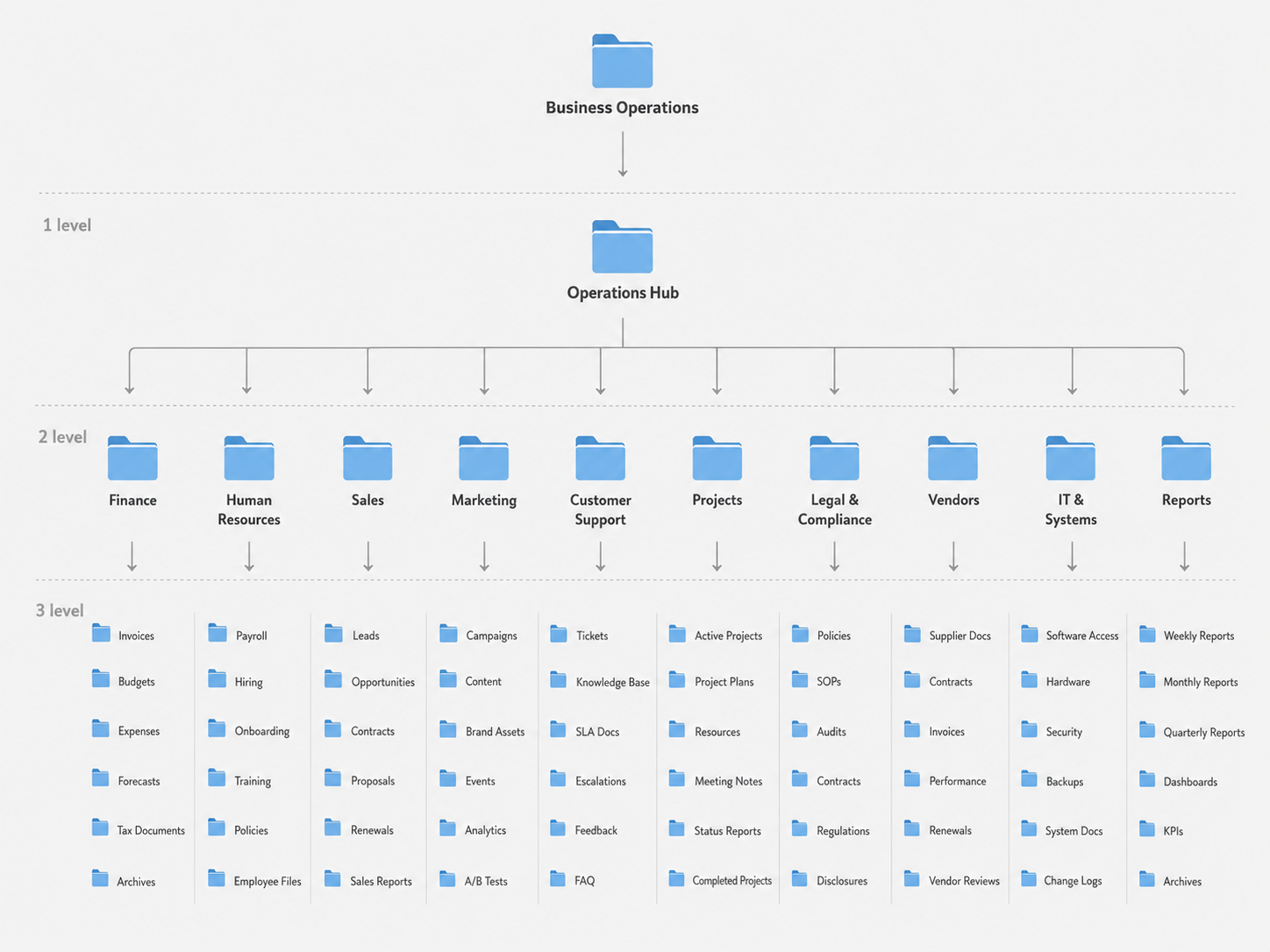
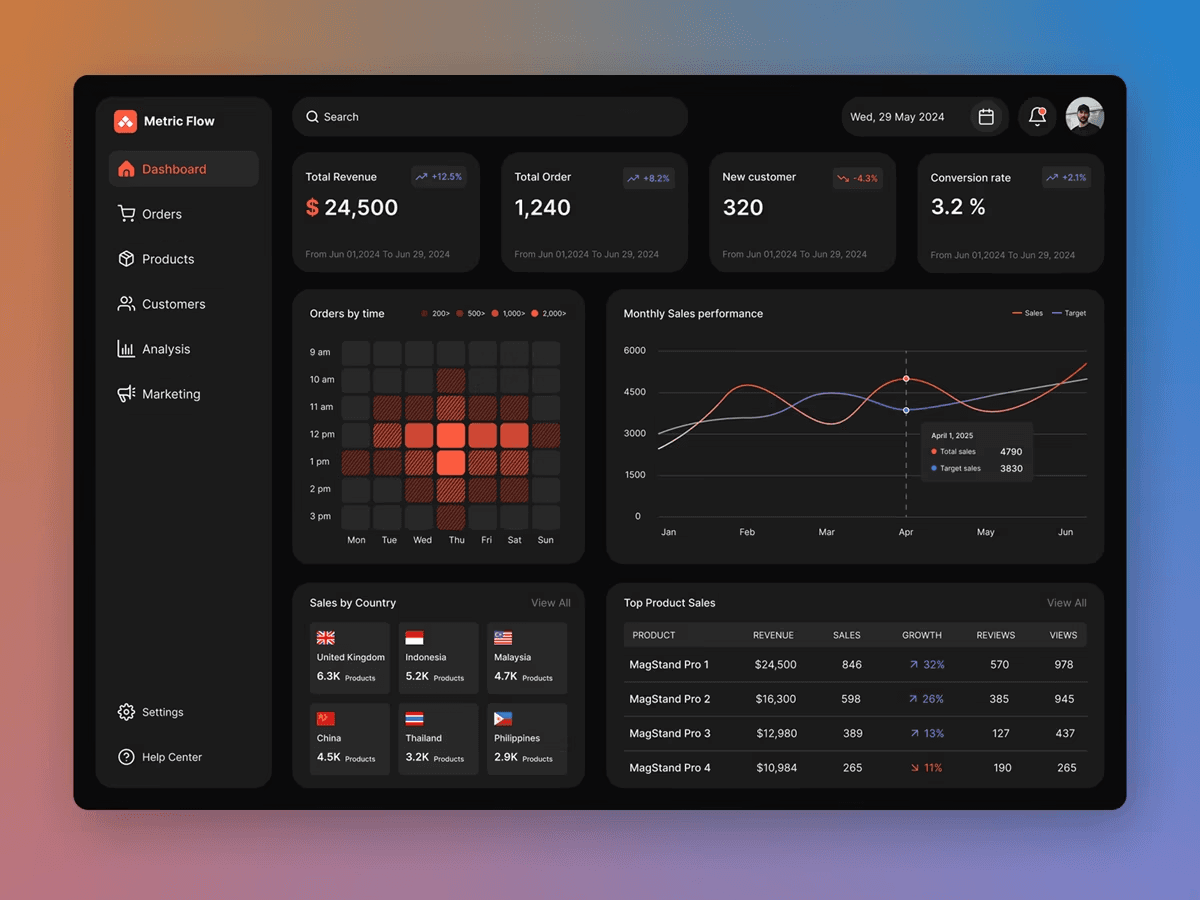
Automation promises to make business operations faster, more efficient, and less reliant on manual work. From invoicing and customer management to reporting and follow-ups, automated systems streamline repetitive tasks and provide real-time insights that fuel growth Yuen, 2025. But beneath this promise lies a risk: hidden blind spots that leave your business vulnerable to errors, oversights, and operational failures.
In this post, I’ll share the five key blind spots that can expose an automated business like mine. These gaps stem from technical limits, flawed process design, over-dependence on automation, and the loss of human judgment. Understanding these blind spots is critical to designing automation that truly works—delivering efficiency without sacrificing control or visibility.
1. How Blind Spots Develop in Automated Workflows
Automated systems rely on interconnected apps, data flows, and rule-based logic to replace manual tasks. For example, small and mid-size businesses map processes, choose platforms, and build automations using IF-THEN rules that trigger alerts or transactions Yuen, 2025. This structure is meant to reveal bottlenecks and reduce repetitive work Fujifilm, 2025.
Yet, this complexity also creates blind spots:
- Incomplete data mapping: When systems aren’t fully aligned, manual fixes and spreadsheets creep back in as unofficial truths. This undermines the integrity of automation and causes errors to multiply Yuen, 2025.
- Legacy system limitations: Older platforms without solid APIs or consistent data formats disrupt data flow, causing gaps in reporting and missed alerts van Dijk, 2024.
- Over-automation without data hygiene: If underlying data isn’t clean and real-time, AI and analytics only amplify mistakes Yuen, 2025.
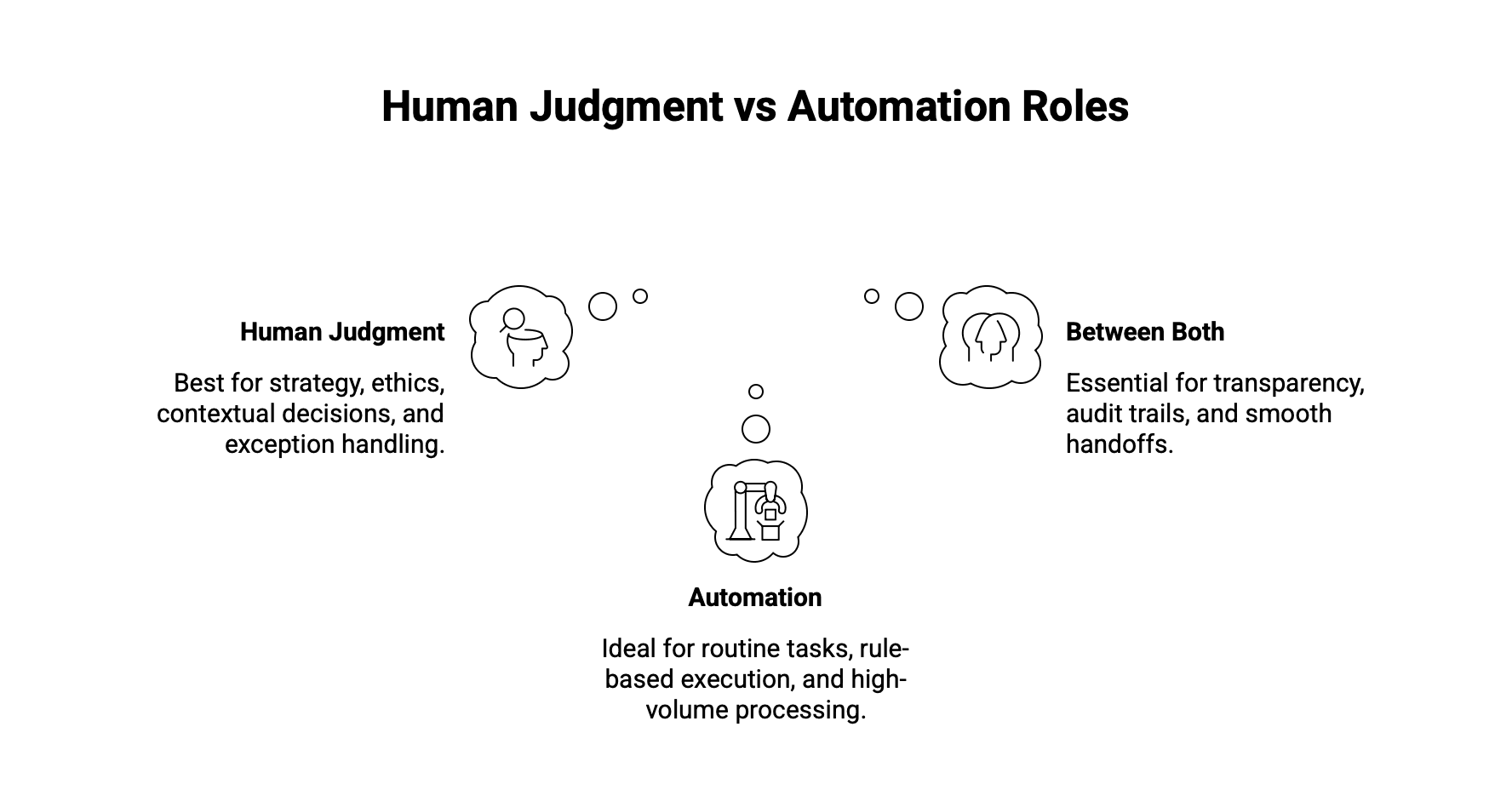
- Removing human judgment too soon: Automation fits repetitive, low-risk tasks best. Critical decisions needing context or ethics still require human oversight Lovelace and Alzoubi, 2025.
- Poor adoption and lack of measurement: Without pilot testing, KPIs, and retraining, users abandon automation and revert to manual processes BizTech Magazine, 2026.
2. The Essential Role of Human Judgment and Ownership
One major blind spot comes from losing human judgment and ownership as automation expands. Businesses risk becoming dependent on vendor “black boxes” they don’t fully understand or control Rainie et al., 2017. Treating machine predictions as replacements, rather than support, for human decisions leads to unchecked errors Lindsay, 2022.
To avoid this:
- Map where judgment happens: Identify who makes key decisions and where learning occurs to keep those experiences intact Duncan, 2026.
- Limit automation to routine tasks: Keep strategy, ethics, and complex decisions in human hands, automating only predictable parts Lindsay, 2022.
- Preserve learning opportunities: Automation shouldn’t replace tasks that develop judgment, like writing specs or managing campaigns. Instead, recreate these through training, simulations, or gradual responsibility Duncan, 2026.
- Demand transparency: Require vendors to provide clear documentation, data lineage, and escalation protocols so your team can trace and challenge decisions Rainie et al., 2017.
- Rotate responsibilities and codify lessons: Avoid concentrating judgment in a few experts by sharing knowledge and documenting failures as learning cases Duncan, 2026.
3. Process Mapping and Measurement: Making Blind Spots Visible
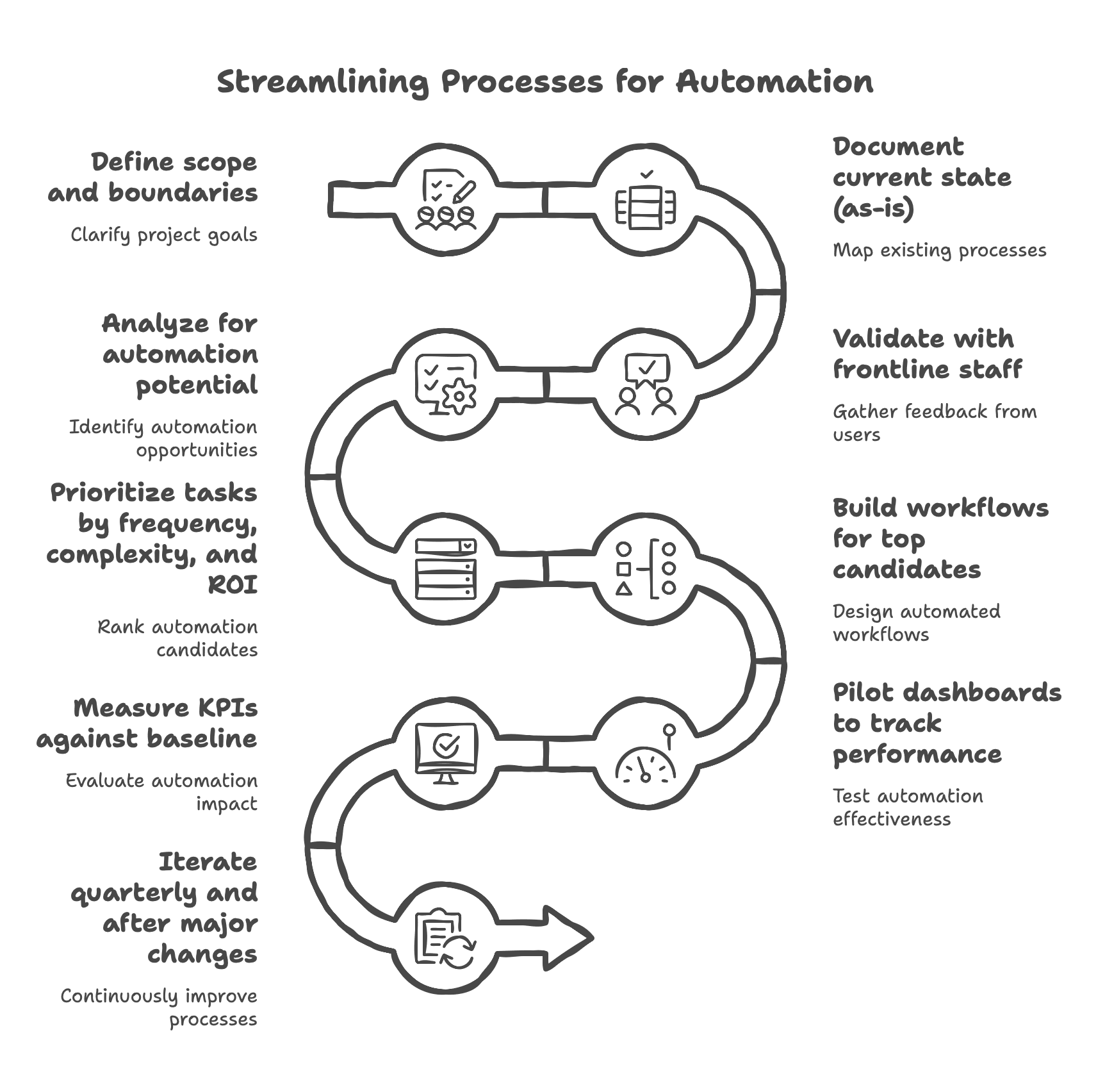
Blind spots thrive when processes remain invisible or poorly understood. Process mapping—a visual representation of activities, decisions, inputs, and handoffs—makes these workflows clear Casanova et al., 2022. This clarity helps identify where automation adds value and where manual steps must stay Zaupper & Burke, 2024.
Steps to effective process mapping:
- Define scope and boundaries.
- Document current workflows through interviews and artifacts.
- Validate maps with frontline staff.
- Analyze for automation potential.
- Convert prioritized tasks into automated workflows Moxo Team, 2025.
Automated tools can mine metadata from complex spreadsheet processes, revealing millions of fragile formula links ripe for automation Zaupper & Burke, 2024.
Avoid common pitfalls:
- Don’t overcomplicate or skip validation.
- Treat maps as living documents, updating quarterly or after major changes Casanova et al., 2022.
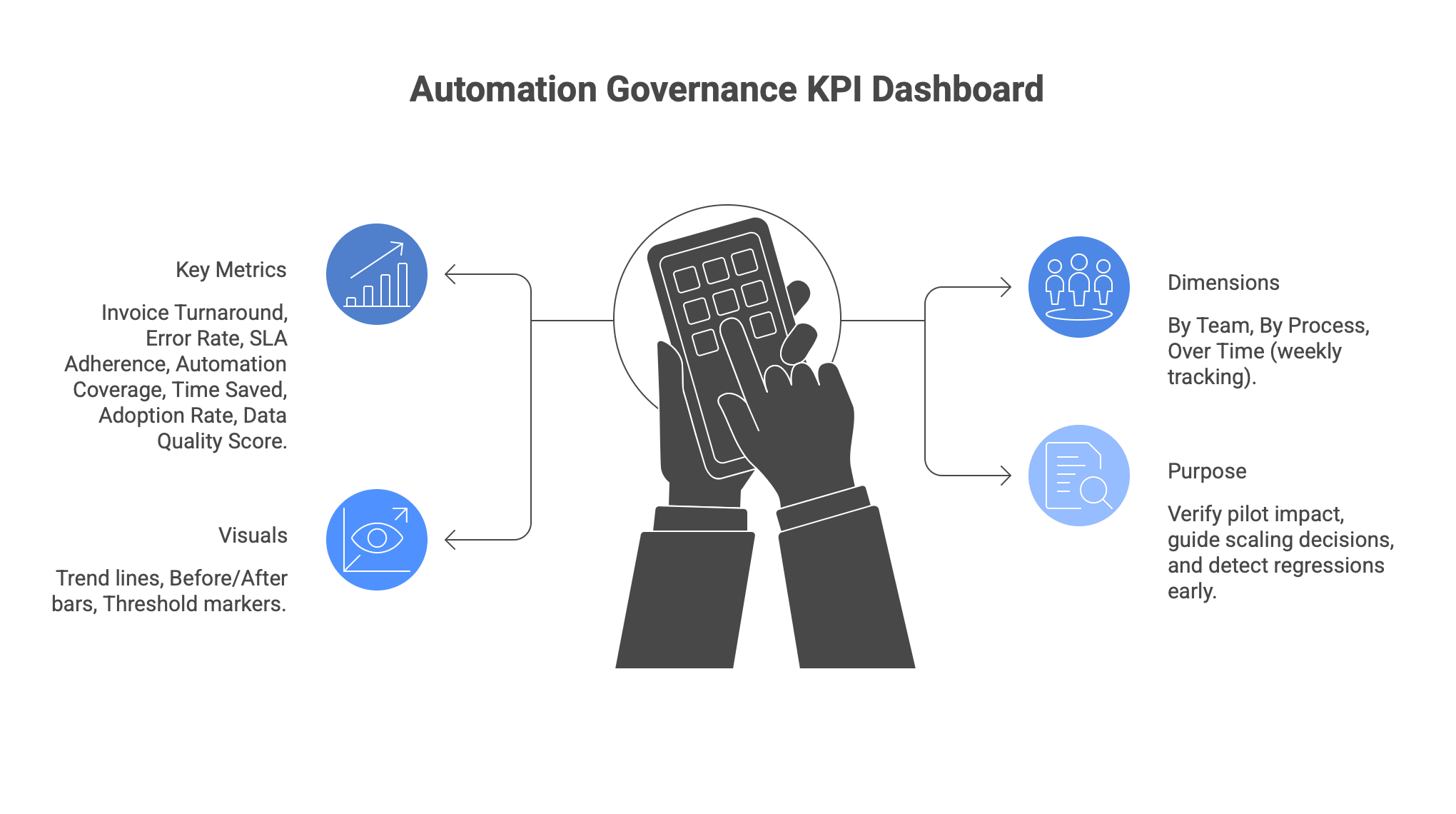
- Track key metrics like invoice turnaround and planned vs. logged fees to spot emerging issues early Yuen, 2025.
- Use pilot dashboards to confirm time savings and error reduction before scaling BizTech Magazine, 2026.
4. Data Quality, Security, and the Limits of Automation
Data is the lifeblood of automation, and poor data quality creates blind spots that multiply errors. Without clean, validated data pipelines, automation produces misleading reports and wrong decisions van Dijk, 2024.
Legacy systems often complicate integration, introducing inconsistencies that go undetected without rigorous cleansing Martinez, 2024.
Security risks to watch for:
- Lack of encryption and role-based access controls increase breach risk Fujifilm, 2025.
- SMBs should enforce encryption, secure access, and regular security checks when choosing and maintaining platforms.
AI-specific concerns:
- Minimize and protect personal data sent to AI systems.
- Ensure vendors comply with legal and ethical standards on data use UNESCO, 2021.
- Beware that AI can embed societal biases hidden in training data, requiring ongoing audits to avoid discrimination Harvard Gazette, 2020.
- Maintain documentation linking inputs to AI decisions and review vendor practices regularly UNESCO, 2021.
Automation cannot fix poor data hygiene, CRM limitations, or lack of change management. Neglecting these leads to slow adoption and manual fallback, reducing ROI Bangia et al., 2020.
5. Continuous Governance: Automation Is a Journey, Not a One-Time Fix
Blind spots won’t disappear if automation is treated as a “set it and forget it” project. They require ongoing governance, measurement, and adaptation.
- Regularly update process maps and data models to reflect business changes.
- Maintain transparency and accountability through documentation and knowledge transfer.
- Engage frontline users continuously to validate automation effectiveness and uncover issues early.
- Track KPIs and pilot results to guide scaling decisions.
- Preserve human judgment by balancing automation with training and role rotation.
This disciplined approach transforms automation from a risky black box into a resilient system that evolves with your business.
Conclusion
Automation can revolutionize your business—but only if you recognize and manage its blind spots. These hidden gaps arise from technical limits, incomplete process design, over-reliance on automation, and the erosion of human judgment.
By mapping your processes, safeguarding data quality and security, preserving human oversight, and committing to continuous governance, you can minimize these blind spots. The result? A smarter, safer automated business that delivers on its promise of efficiency without sacrificing control or clarity.
The future of automation is not just speed—it’s seeing and understanding your business more clearly than ever before.

Frequently Asked Questions
What are common blind spots in automated business workflows?
Common blind spots include incomplete data mapping, legacy system limitations, poor data hygiene, over-automation without human oversight, and lack of process measurement or user adoption.
Why is human judgment still important in automated businesses?
Human judgment is essential for critical decisions, strategy, ethics, and learning—automation should support, not replace, these areas to prevent unchecked errors and loss of expertise.
How can I identify and fix blind spots in my automation processes?
Use process mapping to visualize workflows, validate steps with frontline staff, regularly update documentation, and track key metrics to reveal and address hidden gaps.
Is automation a one-time setup, or does it need ongoing management?
Automation requires continuous governance, regular process updates, user engagement, and KPI tracking to remain effective and resilient as your business evolves.
Can automation solve data quality and security issues on its own?
No—automation relies on clean, validated data and robust security practices; it cannot fix poor data hygiene, legacy system flaws, or lack of proper change management.