
How ChatGPT Runs Business Operations with Human Oversight
How Is ChatGPT Integrated into Business Operations Today?
By September 2026, ChatGPT and similar AI systems have moved beyond experimental tools to become core components of many business operations. Companies now rely on these advanced AI models to automate customer interactions, streamline workflows, and scale processes with remarkable efficiency. This transformation isn’t just about replacing manual tasks, it’s about redesigning how businesses operate by combining data, machine learning, and human oversight.
Understanding how ChatGPT runs business tasks helps leaders make smarter decisions about where AI fits best. It also reveals how to avoid common pitfalls and build systems that create lasting value. Let’s explore the technical setup, decision-making frameworks, and real-world uses of ChatGPT in business today.
What Does the Technical Architecture Behind AI-Driven Business Look Like?
Running business tasks with ChatGPT involves a clear, four-step technical pipeline that turns raw data into automated actions and decisions:
-
Data Ingestion and Management
Businesses collect and organize all relevant data, like chat logs, transaction records, and customer feedback—into a centralized, well governed repository. This step is vital because AI’s effectiveness depends on clean, complete data. Poor data governance leads to weak automation and personalization Chapman Graduate School, 2023. -
Model Training and Selection
Different AI models serve different tasks. For example, retrieval-based models identify customer intent, while transformer, based generative models like ChatGPT create natural, free,text responses. These models are trained on curated datasets and carefully tested for accuracy and fairness before deployment Tarafdar et al., 2020. -
Inference and Orchestration in Applications
Once deployed, AI models run in real time within business applications. They handle tasks such as routing support tickets, auto-responding to inquiries, suggesting next steps to agents, or recommending products. This integration ensures smooth, consistent customer experiences across channels Tarafdar et al., 2020. -
Human-in-the-Loop Escalation and Feedback
Complex or high-risk cases get escalated to human agents, who resolve issues and provide feedback to improve AI models continuously. This approach maintains quality, compliance, and adaptability as business needs evolve Tarafdar et al., 2020.
These stages connect tightly with broader enterprise systems, linking predictive analytics, operational efficiency efforts, and cybersecurity to drive measurable business outcomes Chapman Graduate School, 2023.

How Do Businesses Decide What Tasks ChatGPT Should Automate?
Not every business task is suited for full automation. Companies use decision frameworks to classify tasks based on repeatability, risk, and the need for human judgment.
-
Automate High-Repeatability, Low-Risk Tasks
Routine activities like answering common customer questions or entering data are ideal for ChatGPT-driven automation. -
Keep Humans in the Loop for High-Stakes Tasks
Tasks involving regulatory compliance, safety, reputation, or ethical concerns require human review and dual auditing to avoid costly errors Lovelace and Alzoubi, 2025.
What Frameworks Guide Human-AI Collaboration?
The process starts by inventorying tasks and rating them on the need for human judgment and potential consequences of mistakes. Based on this, businesses design interaction patterns where AI acts as:
- An autonomous agent for simple tasks
- A decision-support tool offering recommendations
- A sounding board for human decision-makers on complex issues
Research shows these modes impact business performance and risk differently Melendez, 2025.
How Is AI Performance Monitored?
Continuous measurement is key. Companies track model accuracy, user engagement, and decision quality. When issues like bias or hallucinations appear, AI workflows pause and escalate to human auditors for review Lovelace and Alzoubi, 2025. This balance ensures automation boosts efficiency without sacrificing essential human insight.
What Business Tasks Does ChatGPT Automate in Practice?
ChatGPT now supports many stages of the customer journey, from lead capture to ongoing client experience management.
How Does AI Improve Lead Capture?
Lead capture starts with collecting prospect data via web forms, chatbots, or phone calls. AI then:
- Tags and scores leads automatically
- Routes high-intent leads directly to sales reps
- Enters lower-priority leads into nurturing workflows managed by AI
This process eliminates lead leakage and speeds up engagement, improving conversion rates B2B Rocket, 2024, Meritto, 2023.
How Does AI Enhance Client Experience?
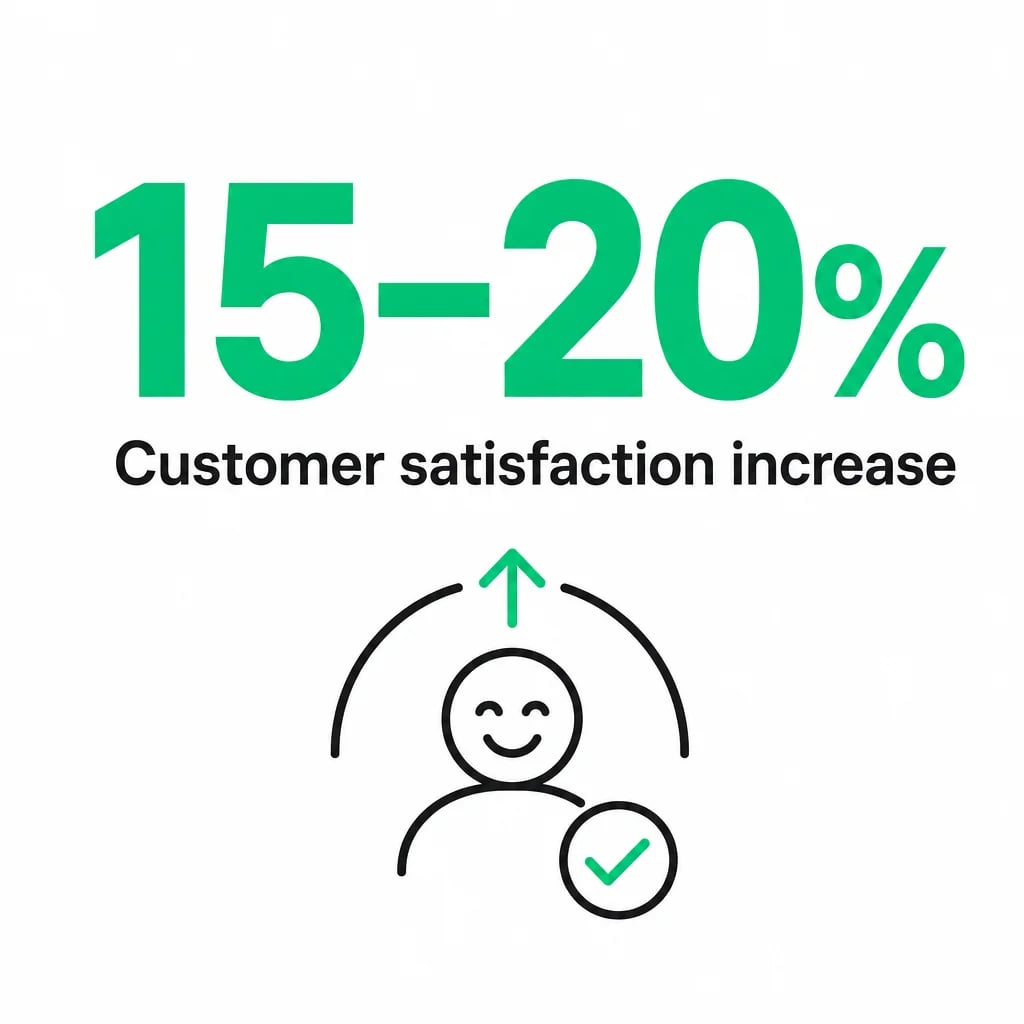
AI orchestrates onboarding, reminders, follow-ups, and review requests through personalized messaging across email, SMS, and apps. Predictive models identify customers at risk of churn or ready to engage, guiding retention campaigns. This dynamic approach boosts satisfaction by 15–20%, revenue by 5–8%, and cuts service costs by 20–30% Fiedler et al., 2025.
What Else Does Successful Deployment Require?
Technology alone isn’t enough. Change management, frontline adoption, and ongoing training are essential to embed AI into workflows. Privacy and data quality challenges also demand clear consent processes and strong governance Chaturvedi & Verma, 2022.
How Do Organizations Scale and Govern AI Systems Like ChatGPT?
Scaling AI from isolated tools to enterprise-wide platforms requires building integrated “AI factories.” These combine data platforms, reusable pipelines, and validated algorithms to speed up AI deployment across functions like supply chain and sales Davenport & Bean, 2025.
What Governance Principles Are Essential?
Responsible AI principles, safety, privacy, explainability, fairness, accountability, and sustainability, must be embedded in operational controls. Without this, agentic systems like ChatGPT risk errors and security breaches that harm business value Wong, 2025.
How Should Businesses Treat AI Agents?
Enterprises should view AI agents as pilotable, auditable services. Gradual expansion of their roles depends on building trust and reliability over time Davenport & Bean, 2025.
What Technical Challenges Remain?
- AI can be error-prone and vulnerable to prompt-injection attacks
- Misalignment with company values is a risk without proper governance
- Ongoing investment in data quality, model oversight, and human collaboration is crucial
Clear metrics on adoption and value help organizations manage these challenges effectively.
What Does This Mean for Business Owners Today?
ChatGPT can run many parts of your business now, but success depends on more than just plugging in technology. It requires:
- Strong data management and model validation
- Thoughtful decision frameworks balancing automation with human judgment
- Practical deployment that improves customer engagement and operational efficiency
- Scalable governance ensuring responsible, reliable AI use
The future of business operations is not just automated—it’s intelligently designed, responsibly managed, and focused on measurable results. Treat ChatGPT as a strategic partner within a human-centered system, and you’ll unlock its full potential for your business.
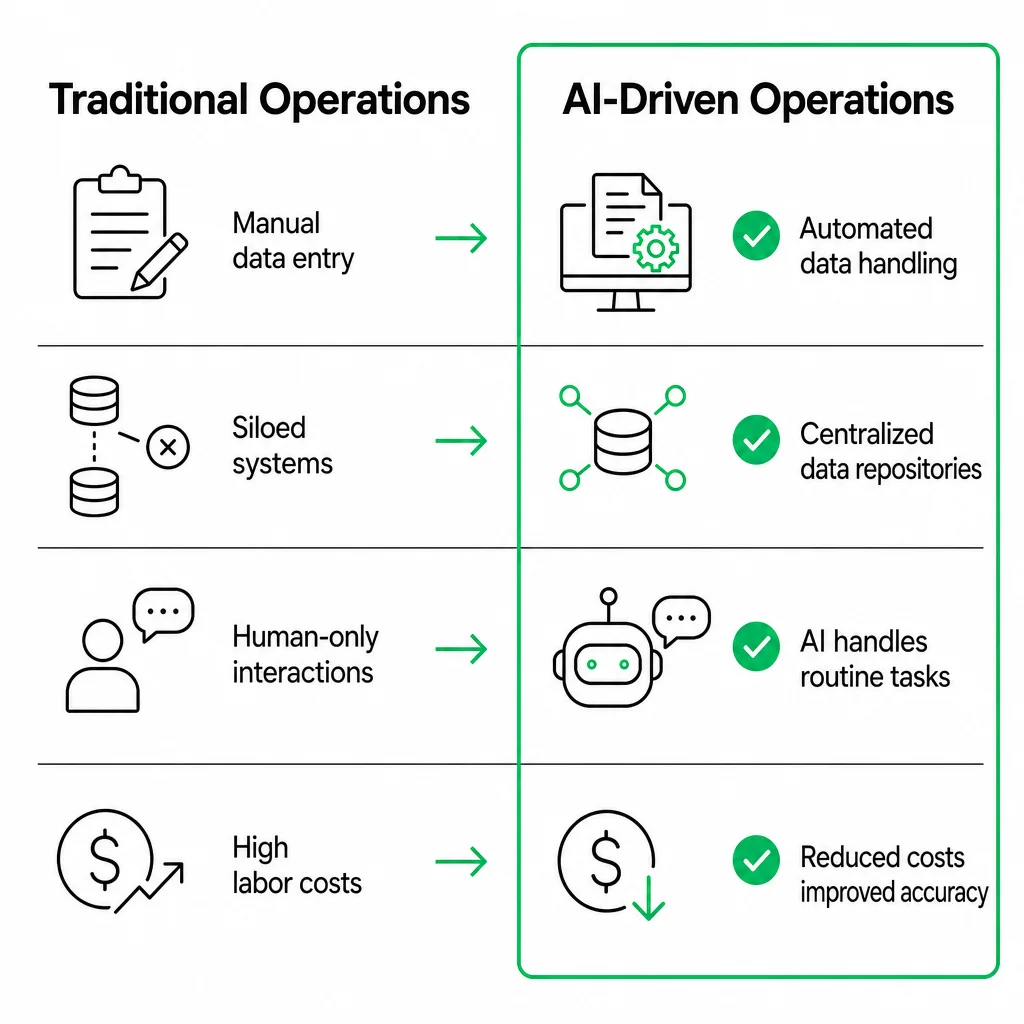
| Traditional Business Operations | AI-Driven Business Operations with ChatGPT (2026) |
|---|---|
| Manual data entry and customer responses | Automated handling of data, inquiries, and workflows |
| Siloed systems and limited data use | Centralized data repositories for streamlined insights |
| Human agents handle all customer interactions | AI manages routine tasks, escalating complex cases to humans |
| Slow adaptation to changing customer needs | AI enables real-time personalization and predictive engagement |
| High labor costs and risk of errors | Reduced costs, improved accuracy, and scalable processes |
Frequently Asked Questions
How is ChatGPT actually used in business operations today?
ChatGPT automates customer interactions, streamlines workflows, and supports decision-making by integrating with business applications to handle tasks like lead capture, client onboarding, and support ticket routing.
What types of business tasks should be automated with ChatGPT?
High-repeatability, low-risk tasks such as answering common questions or processing routine data are ideal for ChatGPT automation, while high-stakes tasks still require human oversight.
How do businesses decide when to involve humans instead of letting AI handle everything?
Companies use decision frameworks that rate tasks by risk and the need for judgment, ensuring humans review complex or sensitive cases while AI manages straightforward activities.
What are the key steps to successfully deploying ChatGPT in a business?
Successful deployment requires strong data management, model validation, thoughtful human-AI collaboration, ongoing training, and clear privacy and governance policies.
Is it risky to let ChatGPT run parts of my business without oversight?
Yes, relying solely on AI can lead to errors, compliance issues, or security risks; effective systems always include human-in-the-loop escalation and continuous monitoring.