Why AI Is Disrupting SaaS Businesses and Which Industries Should Be Concerned
Artificial intelligence (AI) is no longer just an optional add-on for Software-as-a-Service (SaaS) companies—it’s a game-changer that’s reshaping the entire industry. While AI opens doors to new efficiencies and smarter customer experiences, it also brings serious challenges that threaten traditional SaaS business models. This shift is forcing SaaS providers to rethink how they create value, manage risks, and compete in an increasingly AI-driven market.
In this article, we’ll explore why AI is troubling SaaS businesses and highlight the specific industries that face the greatest risks. We’ll also discuss the key areas SaaS companies must focus on to navigate this complex landscape successfully.
How AI Is Transforming SaaS: Opportunities and Threats
AI is becoming the backbone of modern SaaS platforms, changing how software is built, delivered, and used. Unlike past tech upgrades that required new hardware or big system changes, AI integrates directly into existing workflows and data streams. This seamless embedding allows AI to enhance processes—not just automate tasks but also make intelligent decisions using machine learning and natural language processing Davenport & Bean, 2025.
From Rule-Based Automation to Intelligent Systems
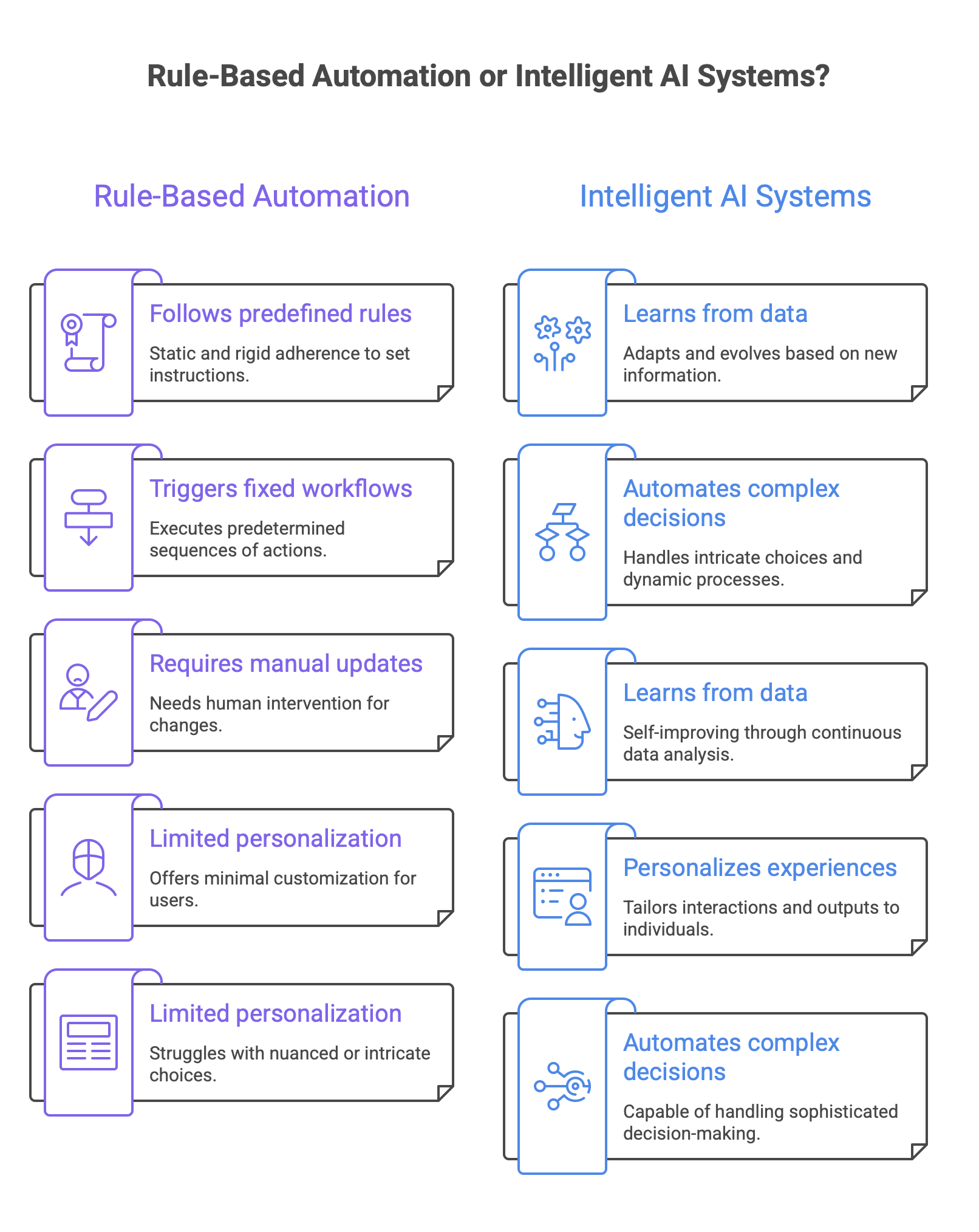
Traditional SaaS relied on fixed, rule-based automation—predefined steps triggered by specific events. AI-powered SaaS goes further by enabling adaptive, context-aware systems that predict outcomes, personalize experiences, and automate complex decisions. Features like 24/7 AI chat support, personalized recommendations, and real-time analytics are becoming standard expectations Tarafdar et al., 2020.
This transformation offers clear business benefits:
- Increased efficiency through automation of complex tasks
- Higher customer engagement via personalized experiences
- New revenue streams from AI-driven insights and services
For example, recommendation engines contribute up to 35% of Amazon’s revenue, showing the power of AI personalization Chapman Graduate School, 2023.
New Risks and Competitive Pressures
However, AI’s deep integration also introduces new challenges. Managing complex data flows, ensuring AI model accuracy, and complying with evolving regulations becomes more difficult. The line between creating value and causing harm narrows, especially when AI automates decisions requiring human judgment or ethical oversight Lovelace & Alzoubi, 2025.
AI also lowers barriers to entry. New competitors can leverage open-source AI models and cloud services to rapidly offer advanced features without heavy in-house development. This commoditization threatens established SaaS providers who fail to innovate or differentiate Davenport & Bean, 2025.
In short, AI is both an enabler and disruptor—offering transformative potential while demanding new strategies for governance, risk management, and competitive positioning.
Why Data Privacy, Security, and Ethics Matter More Than Ever
AI-powered SaaS platforms depend heavily on sensitive customer data—personal information, financial records, and behavioral logs—to deliver personalized and predictive services. This reliance raises the stakes for data privacy, security, and ethical governance UNESCO, 2021.
The Four Pillars of Responsible AI Data Management
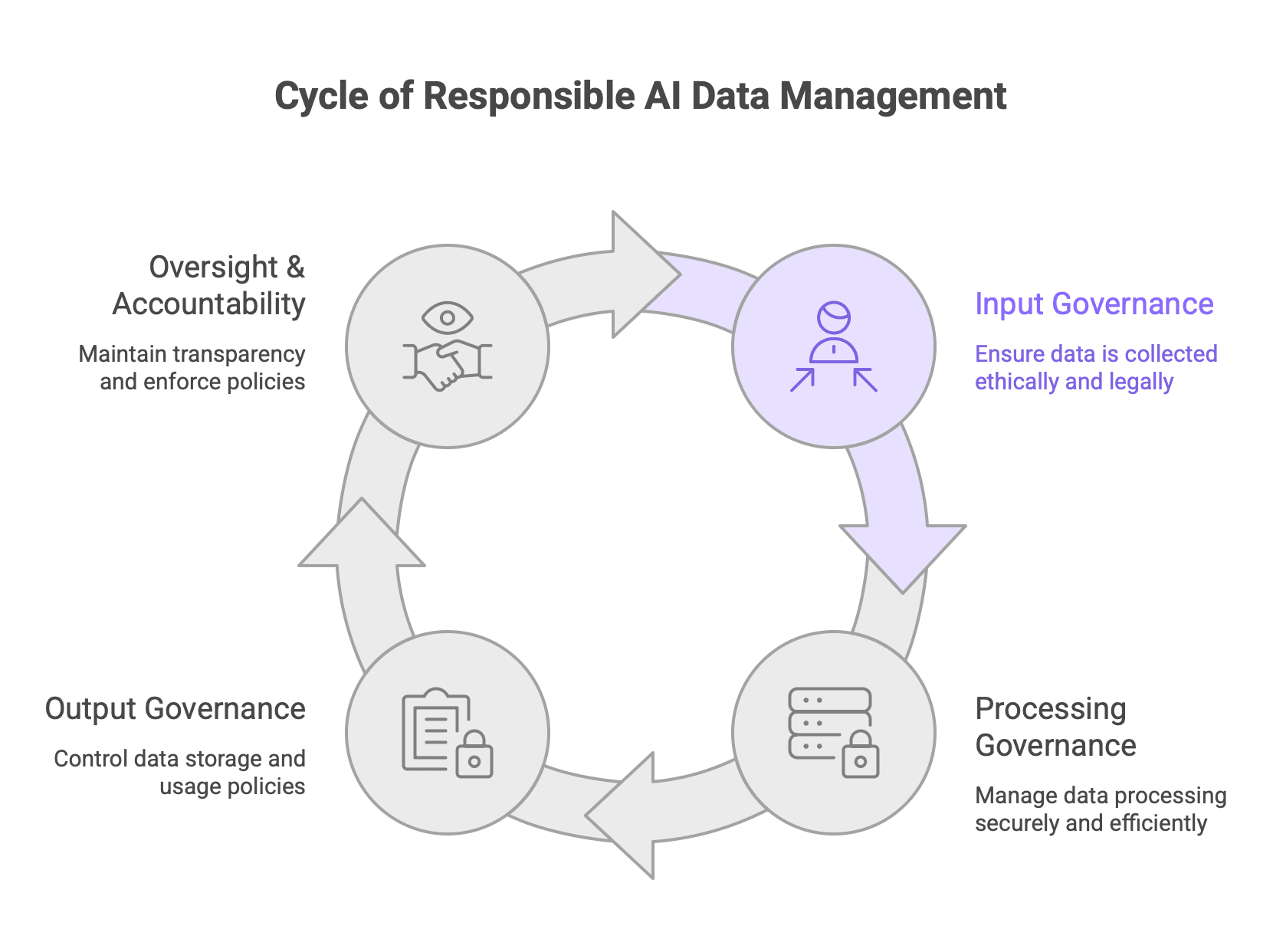
SaaS providers must manage AI data responsibly through four key areas:
- Input governance: Collect only the data necessary for each task, minimizing exposure and complying with regulations like GDPR.
- Processing governance: Decide carefully where and how data is processed. Public AI services may expose data to third parties, while private deployments require more investment but offer tighter control The Chicago School University Library, n.d..
- Output governance: Control how AI-generated results are stored, used, and deleted. Keeping audit logs and clear decision rationales is essential for compliance UNESCO, 2021.
- Oversight and accountability: Maintain transparency and enforce policies that protect privacy and human rights, including regular reviews of AI vendor practices UNESCO, 2021.
Four Pillars of Responsible AI Data Management
The Cost of Neglecting Ethics and Privacy
Ignoring these controls risks legal penalties, reputational damage, and loss of customer trust. AI can unintentionally embed societal biases from training data, leading to discriminatory outcomes that may not be obvious but carry serious consequences Harvard Gazette, 2020.
Moreover, many generative AI tools retain user inputs and may share them with third parties, even after account deletion, creating persistent privacy risks The Chicago School University Library, n.d..
Industries with strict regulations—like banking and healthcare—face even higher stakes, as they can be held legally liable for harmful AI-driven decisions Harvard Gazette, 2020.
For SaaS providers, rigorous data governance is no longer optional—it’s essential for building trust and sustaining long-term client relationships.
Organizational Challenges in Adopting AI Successfully
Integrating AI into SaaS isn’t just a technical upgrade; it’s a major organizational shift. How companies manage the psychology of AI adoption—leadership mindset, team dynamics, and knowledge sharing—can determine success or failure Sayyadi & Collina, 2023.
Leadership and Culture Matter Most
Top leaders must view AI as a continuous capability to develop, not a quick fix. Projects supported as ongoing investments tend to succeed, while rushed, one-off initiatives often fail. Nearly half of AI project failures are linked to CEOs treating AI as a rapid transformation tool rather than a strategic capability Sayyadi & Collina, 2023.
Flatter organizational structures with empowered frontline employees adapt faster to AI-driven changes. Hierarchical, bureaucratic firms struggle to keep pace Sayyadi & Collina, 2023.
Knowledge Management and Psychological Safety
Capturing operational data and frontline feedback through AI tools helps keep models accurate and decisions informed. A culture that encourages experimentation and tolerates risk is essential to reduce anxiety around automation and foster innovation Sayyadi & Collina, 2023.
Avoiding the Automation Paradox
Over-relying on AI can erode human judgment—a risk known as the “automation paradox.” Studies show AI benefits those with strong existing judgment more, potentially increasing inequality unless paired with training and governance Lovelace & Alzoubi, 2025, Melendez, 2025.
Successful SaaS companies align leadership, structure, and culture to support responsible, effective AI adoption.
Measuring and Sustaining AI’s Impact in SaaS
Deploying AI is just the start. SaaS businesses must measure its true impact and sustain benefits over time. This means focusing on strategic outcomes, not just volume metrics The Strategy Institute, 2024.
Building a Robust Measurement Framework
- Define clear success criteria linked to business goals like risk reduction, agility, customer engagement, and revenue.
- Ensure high data quality since poor data leads to unreliable AI outputs.
- Map AI outputs to leading and lagging indicators for proactive decision-making.
- Implement continuous monitoring with real-time alerts to catch deviations early.
Governance and Validation
Human oversight, regular audits, and model revalidations prevent bias, inaccuracies, and blind spots. Without these, trust erodes and risks increase The Strategy Institute, 2024.
Real-World Impact Examples
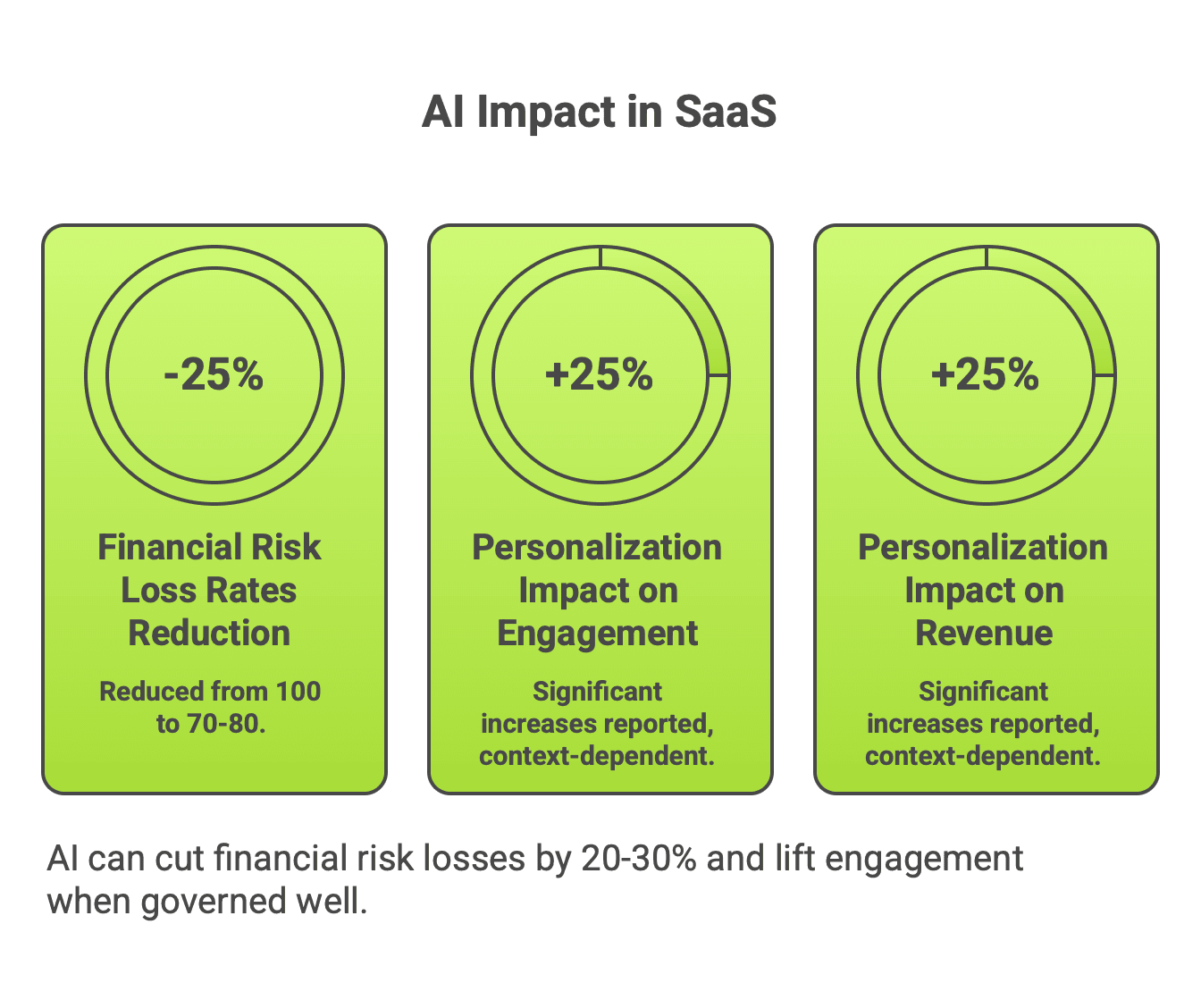
- AI in financial risk management can reduce loss rates by 20–30%.
- AI personalization in media and e-commerce drives significant engagement and revenue growth.
However, these gains depend on disciplined measurement, governance, and a culture ready to adapt as technology and regulations evolve.
Industries Most at Risk from AI Disruption in SaaS
Certain sectors face higher risks due to their reliance on sensitive data, strict regulations, and complex decision-making:
- Financial services: AI-driven risk models and compliance tools must meet stringent regulatory standards.
- Healthcare: Patient data privacy and ethical AI use are critical to avoid harm and legal liability.
- E-commerce and media: Highly competitive markets where AI-powered personalization can quickly commoditize offerings.
- Banking: Legal liability for biased or harmful AI decisions demands tight governance.
These industries must move cautiously but decisively to integrate AI responsibly.
Conclusion: Navigating AI’s Disruption in SaaS
AI is reshaping SaaS businesses in profound ways—offering new opportunities while raising the stakes on privacy, ethics, and organizational readiness. For SaaS providers, the challenge is clear: adopt AI not as a quick fix, but as a foundational capability that requires:
- Rigorous data privacy and ethical governance
- Strong leadership and an adaptive organizational culture
- Strategic measurement and continuous oversight
Those who master these elements will turn AI from a source of disruption into a powerful driver of growth and competitive advantage Davenport & Bean, 2025.
The question for SaaS businesses isn’t if AI will transform their industry—it’s how well they can operationalize AI to deliver lasting value while managing its risks.

Frequently Asked Questions
Why is AI causing disruption in SaaS businesses?
AI is disrupting SaaS businesses by enabling competitors to rapidly deploy advanced features, lowering barriers to entry, and forcing established providers to innovate or risk commoditization. It also introduces complex challenges around data privacy, ethical governance, and regulatory compliance.
What are the main risks of using AI in SaaS platforms?
Key risks include managing sensitive customer data, ensuring AI model accuracy, navigating evolving regulations, and preventing unintended biases or discriminatory outcomes in automated decisions.
How can SaaS companies ensure ethical and secure use of AI?
SaaS companies should implement rigorous data governance across input, processing, and output, maintain transparency, enforce privacy protections, and regularly audit AI systems to uphold ethical standards and regulatory compliance.
Which industries are most vulnerable to AI-driven disruption in SaaS?
Financial services, healthcare, e-commerce, media, and banking are most at risk due to their reliance on sensitive data, strict regulations, and complex decision-making requirements.
Is adopting AI in SaaS just a technical upgrade, or does it require organizational change?
Adopting AI in SaaS demands significant organizational change, including strong leadership, a culture of experimentation, empowered teams, and continuous investment—it's not just a technical upgrade.