How to Integrate Agentic AI into Your Business Strategy
Agentic AI—autonomous systems that can reason, plan, and act independently—is no longer just a futuristic concept. It’s reshaping how businesses operate by automating complex workflows and making smarter decisions faster. But can you realistically integrate agentic AI into your business? And if so, how?
This article breaks down what it takes to successfully adopt agentic AI. We’ll cover why it matters, the technical groundwork you need, how to decide whether to build or buy, and the governance practices essential for responsible use. By the end, you’ll have a clear picture of how agentic AI can fit into your business strategy and what steps to take next.
Why Should Your Business Consider Agentic AI?
Agentic AI goes beyond traditional automation. Instead of following fixed rules, it can independently execute multi-step workflows and adapt as situations change Davenport & Bean, 2025. This means it can transform entire operations, not just individual tasks.
For example, in sales and marketing, agentic AI can:
- Gather data from multiple sources
- Score and segment leads dynamically
- Personalize outreach campaigns
- Automate follow-ups without manual intervention Moskowitz, 2025
In research or knowledge work, it speeds up literature reviews, synthesizes data, and manages administrative tasks—freeing experts to focus on innovation Glean, 2025.
The payoff isn’t just efficiency; it’s scaling expertise and decision-making across your organization.
What Are the Risks?
Agentic AI isn’t a plug-and-play fix. Without clear governance and human oversight, it can make biased or incorrect decisions and stray from your business goals Davenport & Bean, 2025. So, integrating it requires careful planning and ongoing management.
What Technical Foundations Does Agentic AI Need?
Agentic AI depends heavily on data. To make smart decisions, it needs seamless access to your business’s diverse data sources—like CRM systems, web analytics, and financial records Miloshevska, 2024.
How Should You Handle Data Integration?
Start by mapping where your data lives and classifying its sources. Then choose the right integration method:
- ETL (Extract, Transform, Load): Best for batch processing but slower.
- ELT (Extract, Load, Transform): Useful for flexible data lakes.
- API-led or streaming integration: Ideal for real-time needs like fraud detection or personalized marketing Miloshevska, 2024.
Consolidating data into governed warehouses or lakes (like Snowflake or BigQuery) creates a unified, high-quality dataset for your AI to analyze.

What About Data Quality and System Architecture?
Reliable AI requires clean, validated data. Implement connectors, standardize data fields, and perform deduplication to avoid errors or bias Miloshevska, 2024.
Your system architecture should include role-based access controls, encryption, and error-handling middleware. This ensures automation supports your operations without disruption Yuen, 2025.
Why Is Data Governance Important?
Centralizing data isn’t enough. You need data literacy across your team, clear governance policies, and key performance indicators (KPIs) to turn integrated data into actionable insights Roy, 2025.
Should You Build, Buy, or Integrate Agentic AI?
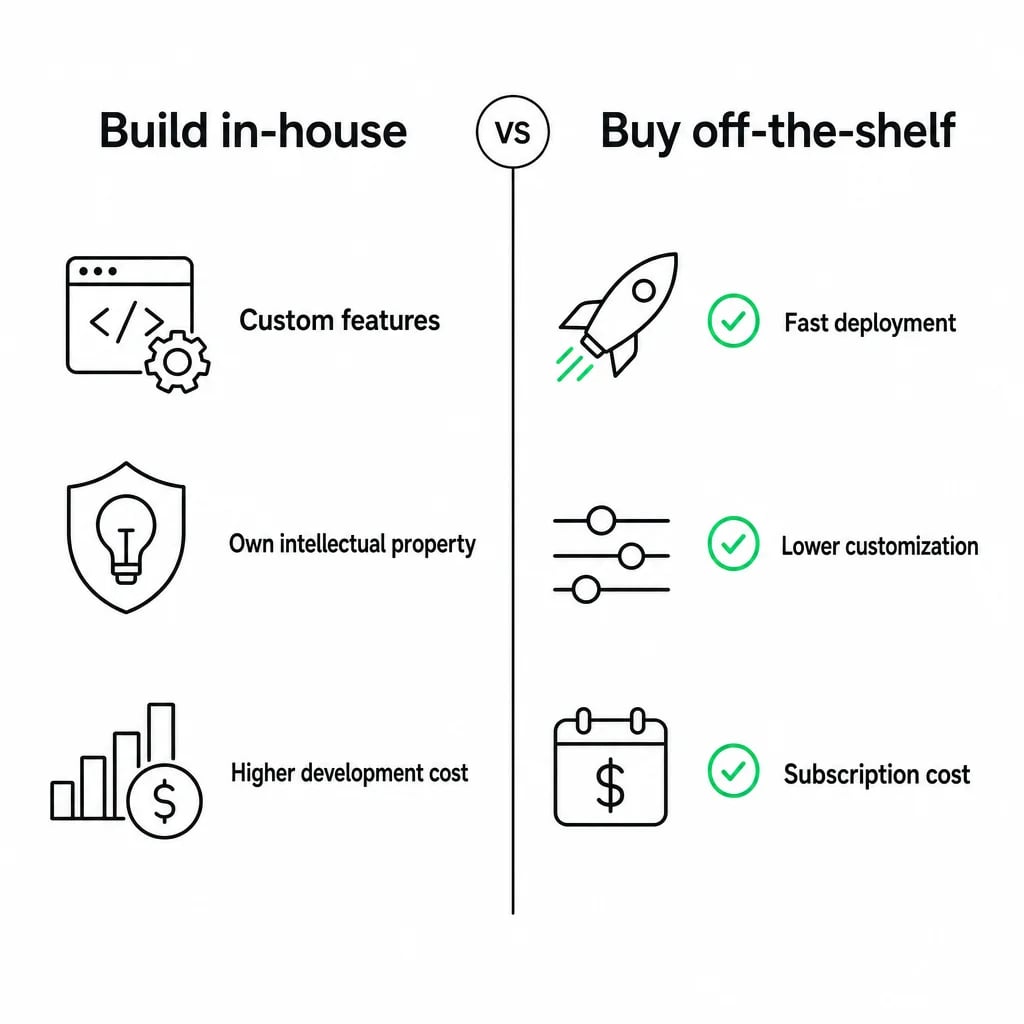
Choosing how to acquire agentic AI capabilities is one of the most critical decisions.
- Build in-house: Ideal if AI is core to your competitive edge, letting you customize features and own intellectual property Quagliotti, 2024.
- Buy off-the-shelf: Best for fast deployment or non-differentiating use cases.
- Hybrid approach: Start with a vendor product to validate value, then add custom modules over time Quagliotti, 2024.
Maintaining modular integration and abstraction layers helps avoid vendor lock-in and reduces future migration costs.
What Common Pitfalls Should You Avoid?
- Over-customizing vendor platforms without governance
- Ignoring how costs scale with usage
- Treating the decision as one-time instead of iterative GP Strategies Corporation, 2026
A disciplined approach—starting with pilots, measuring ROI, and scaling based on evidence—ensures sustainable value.
How Do You Govern and Oversee Agentic AI Responsibly?
As agentic AI gains autonomy, governance and human oversight become essential.
What Governance Practices Work Best?
- Automate repetitive, low-risk tasks
- Keep humans in the loop for high-stakes decisions requiring judgment or ethics Lovelace and Alzoubi, 2025
- Embed checkpoints, dual auditing, and scenario-based training so staff can review and override AI decisions
How Should You Monitor AI Performance?
Continuously track model accuracy, user engagement, and decision quality. Establish protocols to detect errors, bias, or model drift. Invest in reskilling your team for oversight roles Lovelace and Alzoubi, 2025.
Without this, over-automation can reduce human cognitive engagement and increase risks of mistakes or unfair outcomes Melendez, 2025.
What Role Does Leadership Play?
Leaders must treat AI as a capability to develop over time, sponsoring pilots and fostering a culture that tolerates risk and encourages learning Sayyadi and Collina, 2023. Feedback loops and knowledge management ensure AI insights improve both technology and human decisions Davenport & Bean, 2025 Quagliotti, 2024 Lovelace and Alzoubi, 2025.
What’s the Bottom Line?
Integrating agentic AI into your business is a strategic journey, not a quick fix. It requires:
- Aligning AI capabilities with your business goals
- Building strong data integration and system architecture
- Making informed build-versus-buy decisions
- Establishing clear governance and human oversight
- Cultivating a culture of continuous learning and adaptation
When done right, agentic AI can transform workflows, scale expertise, and unlock new value. But it demands ongoing investment in technology, people, and processes.
By approaching integration thoughtfully and iteratively, your business can harness agentic AI’s potential while managing risks—putting you ahead in a rapidly evolving landscape Davenport & Bean, 2025 Quagliotti, 2024 Lovelace and Alzoubi, 2025.
| Traditional Automation | Agentic AI Integration |
|---|---|
| Follows fixed rules and handles repetitive tasks | Executes multi-step workflows and adapts to changing situations |
| Limited to individual tasks | Can transform entire operations and scale expertise |
| Requires manual intervention for exceptions | Acts autonomously and reduces manual oversight |
| Static workflows | Dynamic, learning-based workflows |
| Efficiency gains are incremental | Enables smarter, faster decisions and broader impact |
Frequently Asked Questions
What is agentic AI and how is it different from traditional automation?
Agentic AI can reason, plan, and act independently, handling complex workflows and adapting to changes, while traditional automation only follows set rules for repetitive tasks.
How can a small business start integrating agentic AI into their operations?
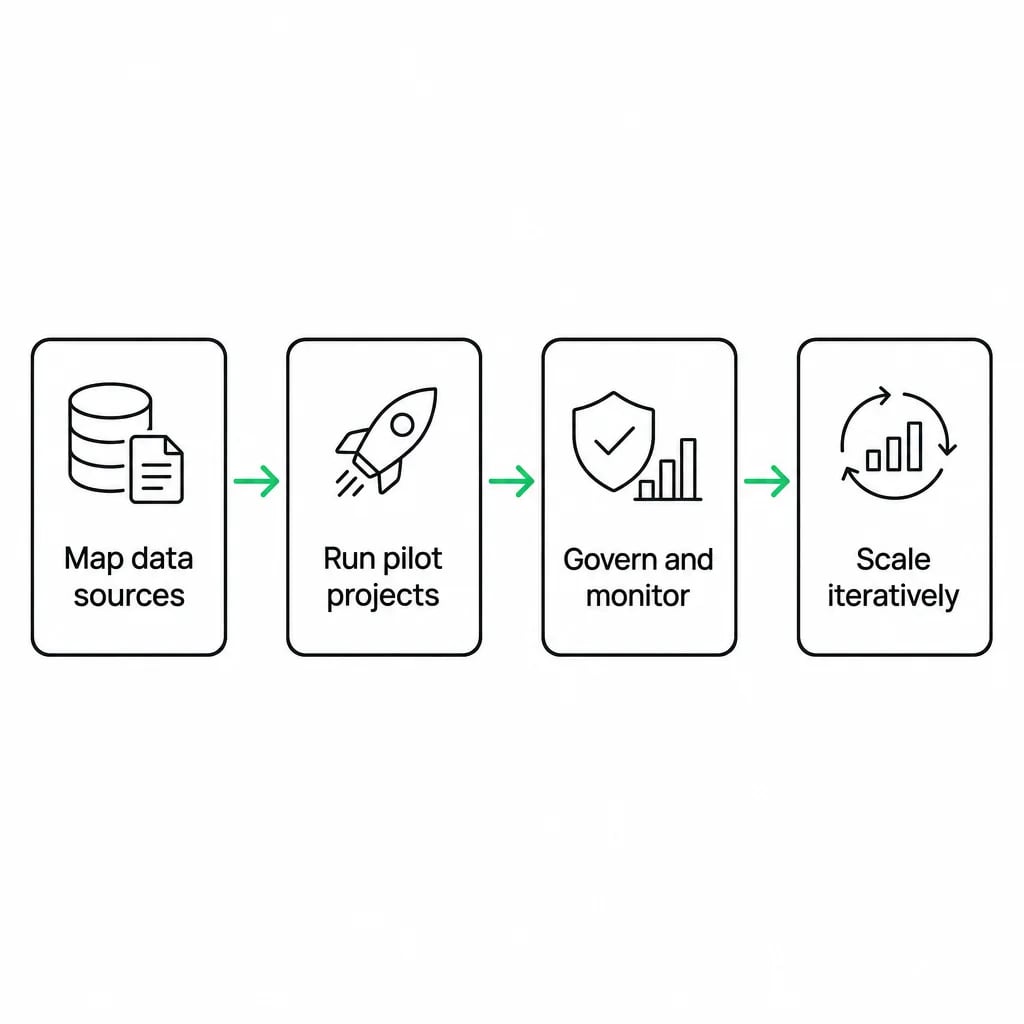
Begin by mapping your data sources, choosing the right integration method, ensuring data quality, and starting with pilot projects to measure impact before scaling further.
Should I build, buy, or use a hybrid approach for agentic AI in my business?
Build in-house if AI is core to your business, buy off-the-shelf for quick deployment, or use a hybrid—starting with a vendor and customizing over time to balance speed and flexibility.
What are the main risks of using agentic AI without proper governance?
Without strong governance and human oversight, agentic AI can make biased or incorrect decisions and may drift from your business objectives.
How do you ensure agentic AI makes responsible decisions in your company?
Automate low-risk tasks, keep humans involved in high-stakes decisions, and set up monitoring, checkpoints, and training to review and override AI actions when needed.