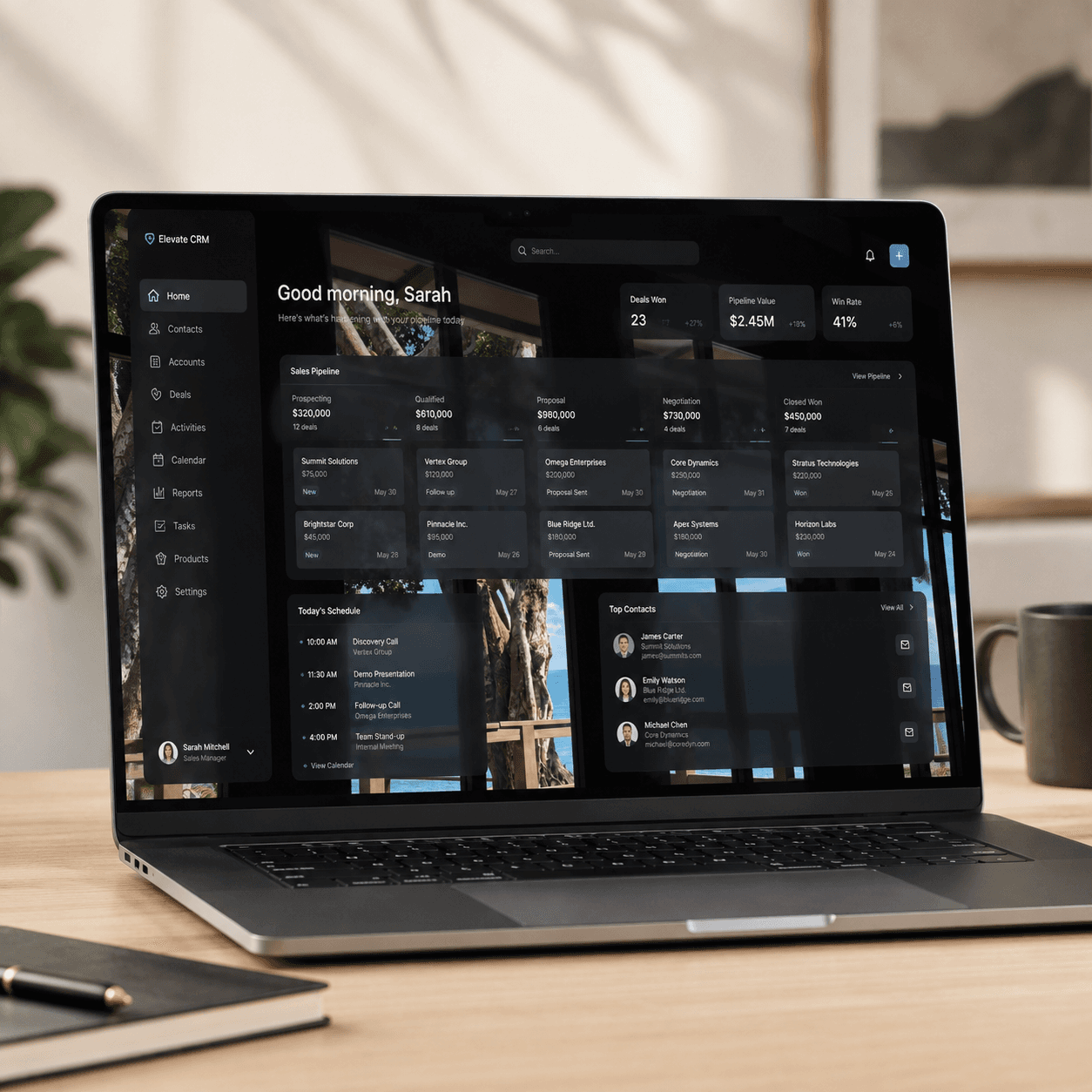
Choosing the right CRM (Customer Relationship Management) system is a critical step for small businesses aiming to improve customer relationships, streamline sales, and support growth. A CRM is much more than a digital contact list; it acts as the central hub that organizes customer information, automates routine tasks, and provides clear visibility into sales pipelines and revenue forecasts Fallon, 2026. But what makes a CRM the best fit for a small business? It’s a combination of features, automation capabilities, and human factors like team adoption and training.
This article breaks down what small businesses should look for in a CRM, how automation and pipeline management boost results, and why user ownership is key to success.
What Role Does a CRM Play in Small Business Operations?
At its core, a CRM serves as the operational nerve center for managing leads, customers, and sales activities. It centralizes all contact records and organizes them into clearly defined pipeline stages, each with specific criteria for moving deals forward Fallon, 2026.
By automating follow-ups and reminders, a CRM ensures consistent engagement with prospects and customers, reducing the risk of leads slipping through the cracks. This automation helps maintain steady communication without overburdening your team with manual tasks.
How Does Centralization Improve Sales Management?
- Standardizes tracking from initial contact through deal closure.
- Provides real-time visibility into sales progress and bottlenecks.
- Enables forecasting by measuring key metrics like conversion rates and deal size.
However, these benefits only materialize when there is clear ownership of accounts and proper training. Without these, CRM adoption can falter, limiting its impact Strunk, 2024.
How Can Automation and Follow-Up Sequences Drive Sales?
Automation is one of the most valuable features a CRM offers small businesses. Automated follow-up sequences, such as scheduled emails, call reminders, or SMS prompts, keep prospects engaged throughout their decision-making journey PlanGrowDo, 2026.
Automation takes this burden off your team by embedding rules and reminders, ensuring no lead is neglected. It also supports lead scoring, which means assigning points based on prospect behavior to prioritize high-potential leads and route them for immediate follow-up while nurturing others more slowly Morris, 2025.
Why Is Consistent Follow-Up So Important?
- Many sales require multiple follow-ups; 80% of deals close only after several touches.
- The “follow-up gap”, failing to reach leads promptly, causes lost revenue Dubay, 2025.
- Best practices include sending a thank you or confirmation within 24 to 48 hours, followed by value-driven contacts at regular intervals PlanGrowDo, 2026.
Automation takes this burden off your team by embedding rules and reminders, ensuring no lead is neglected. It also supports lead scoring—assigning points based on prospect behaviour to prioritize high-potential leads and route them for immediate follow-up while nurturing others more slowly Morris, 2025.
Benefits of Automated Lead Scoring and Routing
- Focuses sales efforts on the most promising leads.
- Improves conversion rates by timely engagement.
- Frees up time for sales reps to concentrate on closing deals Foundry, 2022.
How Does Pipeline Management Improve Forecasting?
A strong CRM organizes sales into pipeline stages that reflect the buyer’s journey, from first contact to closing and beyond Salesforce, 2025. Each stage has clear entry and exit criteria, tied to specific sales activities and buyer signals.
What Are the Keys to Effective Pipeline Management?
- Standardized, clearly defined stages for consistency.
- Regular updates and data entry discipline to keep information current.
- Weekly pipeline reviews and daily deal updates to maintain accuracy Akhter, 2025.
Visualizing the pipeline helps assign responsibilities, identify bottlenecks, and track conversion rates between stages. Automation can capture engagement signals, like emails or meetings, and automatically update deal stages, reducing errors and improving forecast reliability Salesforce, 2025.
However, forecasts are only as good as the data behind them. Incomplete or outdated CRM data can lead to inaccurate predictions and missed revenue targets Akhter, 2025. That’s why maintaining data hygiene and process alignment through training and governance is essential Strunk, 2024.
Why Are Human Factors Critical for CRM Success?
Technology alone doesn’t guarantee CRM success. The human side, user adoption, training, and ownership, is just as important.
What Drives Effective CRM Adoption?
- Clear account ownership so each lead has a responsible person.
- Ongoing training to ensure users understand how to use the system effectively.
- Defined roles and responsibilities to avoid confusion or resistance Strunk, 2024.
Research shows most sales reps don’t see CRMs as threats but as tools that support their work, if implemented with clarity and support. Without training and ownership, adoption rates drop, and data quality suffers, reducing the CRM’s value Strunk, 2024.
How Can Overreliance on Automation Backfire?
- Automation without proper governance can generate noise, not insight.
- Lack of clear rules for ownership and data entry leads to unreliable information Fallon, 2026.
Regular training, well-documented processes, and a culture of accountability are vital to making CRM automation work effectively.
What Should Small Businesses Look for When Choosing a CRM?
The best CRM for a small business isn’t necessarily the one with the most features or the lowest price. It’s the one that fits the business’s sales processes, encourages disciplined pipeline management, and is embraced by the team through clear ownership and training.
Key Features to Prioritize
- Centralized contact and opportunity management.
- Automation of follow-up sequences and lead scoring.
- Visual pipeline management with clear stage definitions.
- Reporting and forecasting tools based on accurate, up-to-date data.
- User-friendly interface with training and support resources.
By selecting a CRM that aligns with these needs and investing in proper rollout and governance, small businesses can unlock the full potential of their CRM. This leads to greater efficiency, stronger customer relationships, and predictable, scalable growth Fallon, 2026.
Conclusion: How Can Small Businesses Maximize CRM Value?
A CRM is a powerful tool when it becomes the operational hub for managing customers and sales. Automation and pipeline management improve efficiency and help capture every opportunity. But the ultimate key to success lies in human factors, clear roles, regular training, and a commitment to data quality Strunk, 2024.
Small businesses should treat CRM implementation as both a technology upgrade and an organizational change. Embedding the system into daily routines ensures it drives real business outcomes. When done right, a CRM becomes the foundation for sustainable growth and stronger customer engagement.

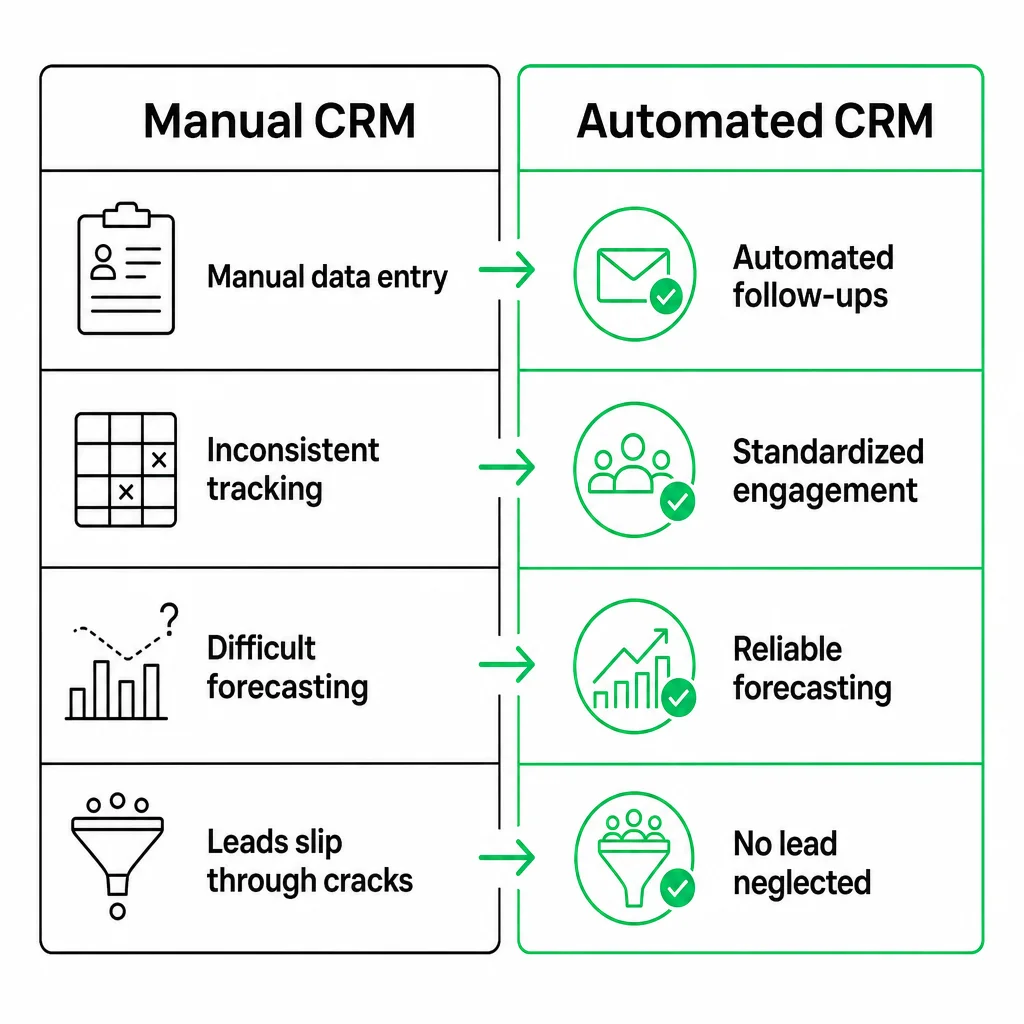
| Manual CRM Management | Automated CRM with Modern Features |
|---|---|
| Relies on manual data entry and follow-ups | Automates follow-ups, reminders, and lead scoring |
| Inconsistent tracking and communication | Standardized, consistent engagement with prospects and customers |
| Difficult to visualize sales pipeline and forecast accurately | Visual pipeline management and reliable forecasting tools |
| Higher risk of leads slipping through the cracks | Ensures no lead is neglected with automation |
| Data quality depends on individual discipline | Regular updates and automation improve data accuracy |
Frequently Asked Questions
What is a CRM and why do small businesses need one?
A CRM is a system that centralizes customer information, organizes sales activities, and automates routine tasks to help small businesses manage leads, improve customer relationships, and drive growth.
How does CRM automation improve sales follow-up?
CRM automation schedules follow-up emails, calls, and reminders, ensuring prospects receive consistent engagement and no leads are forgotten, which significantly increases the chances of closing deals.
What features should small businesses prioritize when choosing a CRM?
Small businesses should look for centralized contact management, automated follow-up sequences, visual pipeline management, accurate reporting, and a user-friendly interface with strong training and support resources.
Why is user adoption important for CRM success?
User adoption ensures that team members consistently use the CRM, maintain data quality, and follow standardized processes, which are essential for the system to deliver real business value.
Can relying too much on CRM automation cause problems?
Yes, overreliance on automation without clear ownership and proper training can lead to unreliable data and excessive notifications, reducing the CRM’s effectiveness.