Curative cancelled its Salesforce contract and built its own with AI. Did it pay off?
A US health insurer swapped the customer system it rented for one its own team built, and this is what held up, what rests on its CEO's account, and what it means for a small business.
At a glance
Curative, a US health insurer, cancelled the customer system it rented from Salesforce and, its CEO says, moved its staff onto a replacement its own team built with the help of AI. A customer system, usually called a CRM, is the shared address book and to-do list a sales and service team works from: who each customer is, what was promised to them, and what happens next.
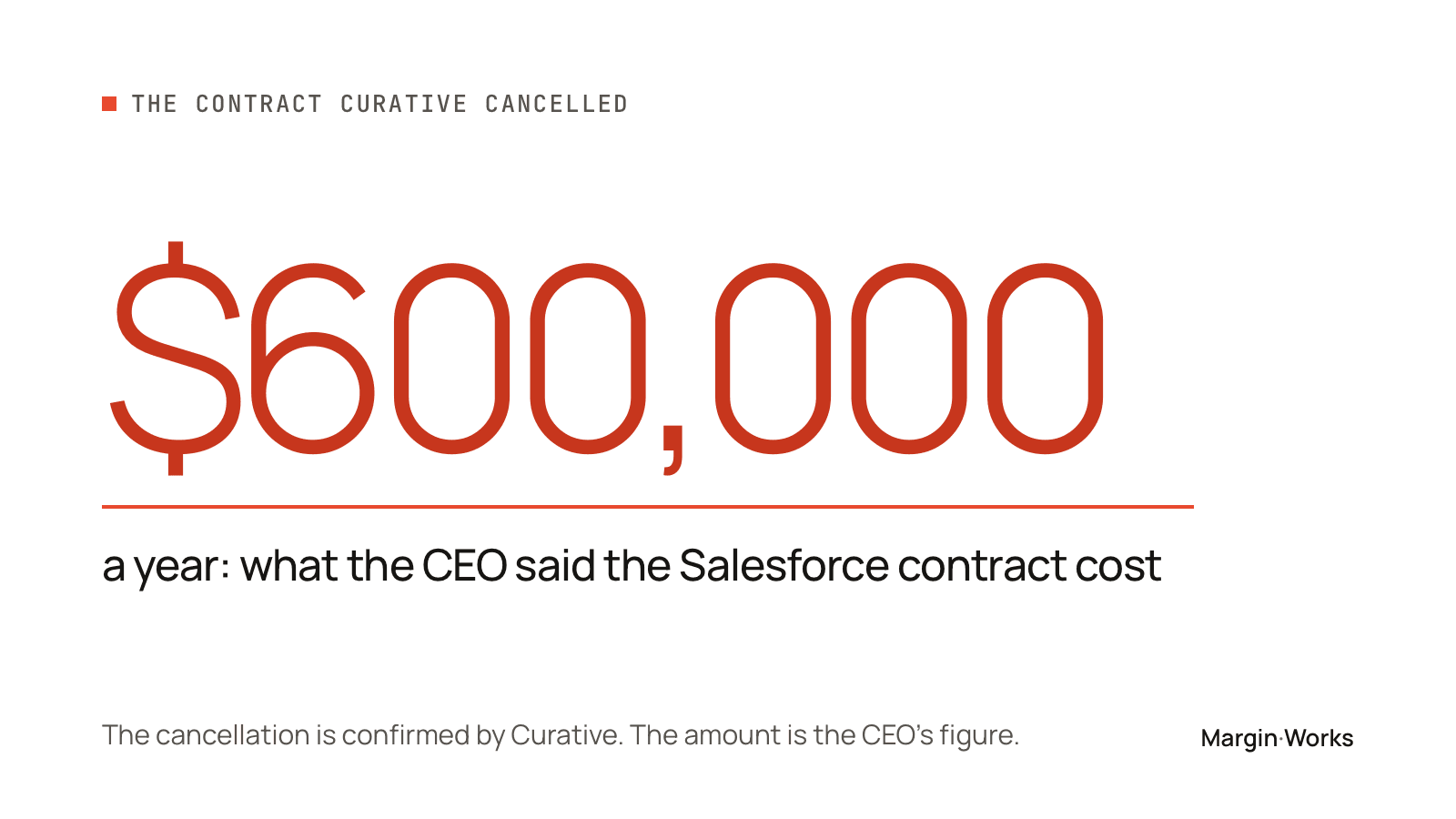
Most companies rent one by the month, per person, so the bill never stops, it grows with every hire, and the software is built for everyone rather than for the way your business works. If AI makes building your own version cheap and fast, you can stop paying the rent and get a tool that fits, as long as looking after it costs less than the rent did. Curative's CEO, Fred Turner, said on the 20VC podcast that the Salesforce contract cost $600,000 a year[1].
What they changed
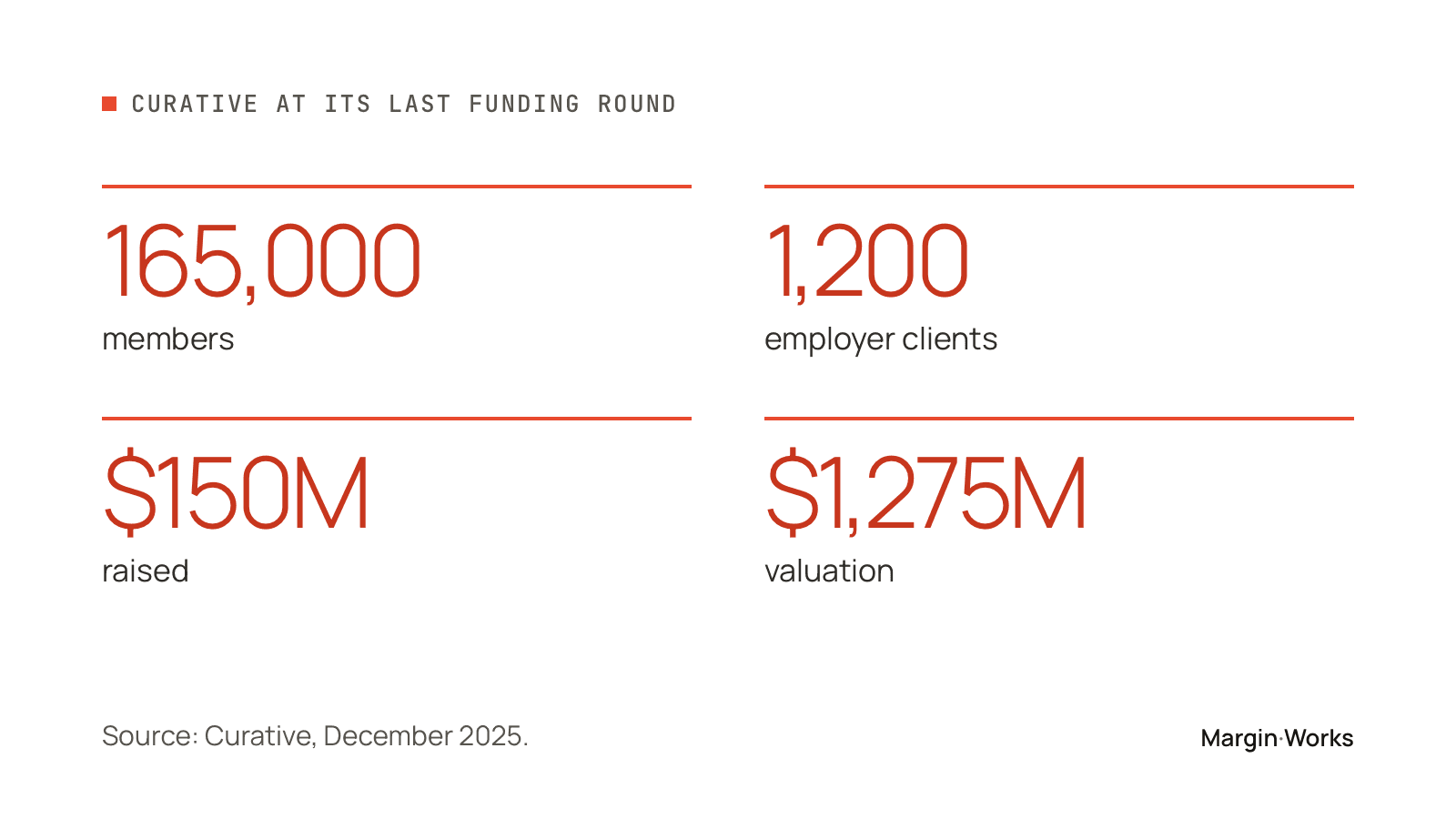
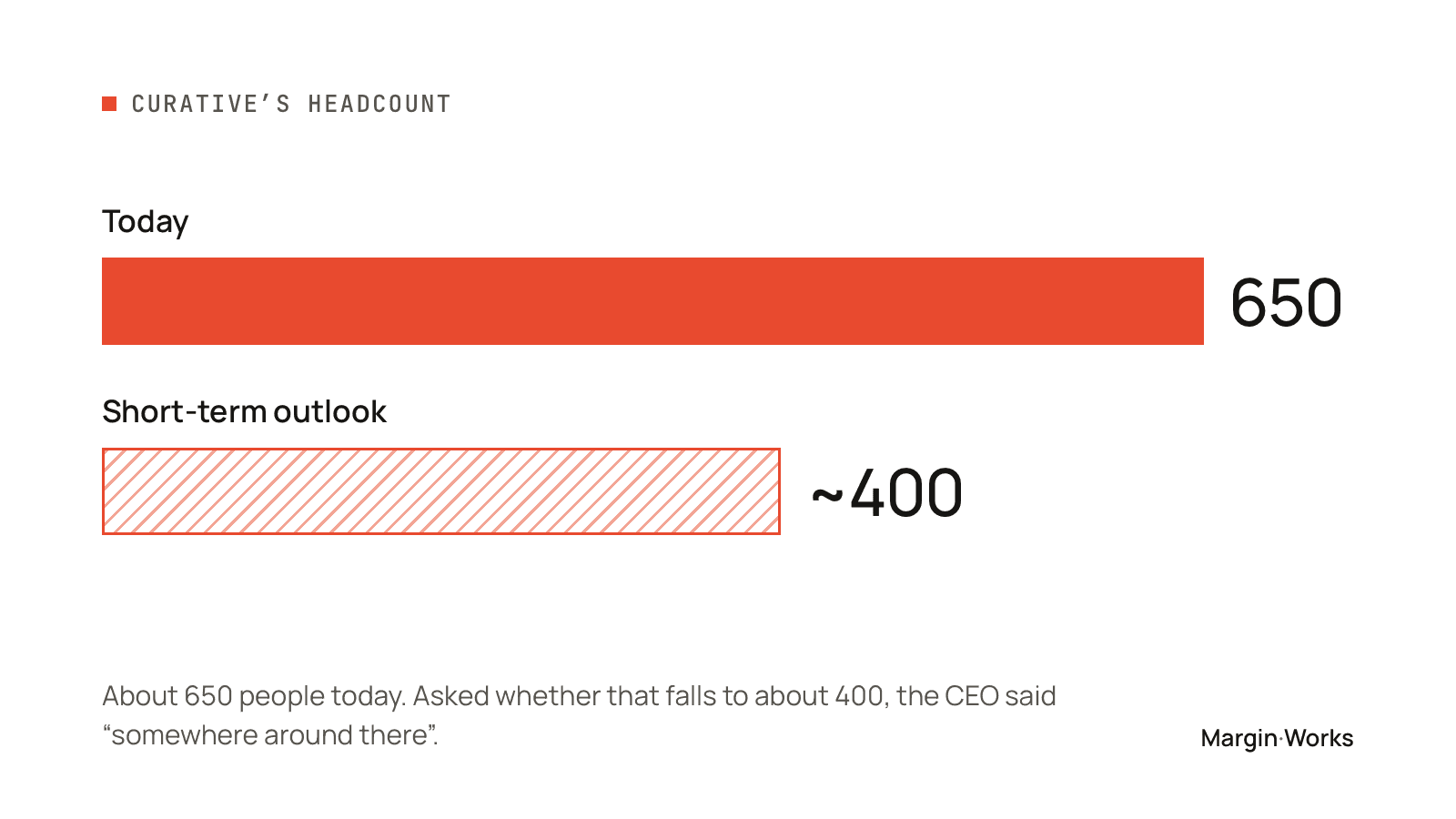
Curative sells health plans to employers, and on the sales side it sells through brokers, the agents who help a company choose its insurance, Turner said[1]. It is not a small business: it has about 650 people, according to Turner[1]. When it last raised money, Curative reported 165,000 members and 1,200 employer clients[2]. That round raised $150 million and valued the company at $1,275 million, Curative said[2]. Its customers are large too: even its smallest employer clients are contracts of at least $1,000,000, Turner said[1].
The customer system is where Curative's sales and service people kept track of those employers, brokers and members. The yearly fee was not the only thing it cost. Curative also had "a full-time Salesforce administrator," a person paid to keep the software running, Turner said[1].
The switch was part of a wider push against rented software, not a one-off. Turner described a slide at one of Curative's internal meetings that shows when each rented-software contract is due and whose job it is to tell the vendor Curative is not renewing[1]. The company is cutting about 80% of what it spends on rented software this year, Turner said, a cut under way rather than one finished[1]. Asked whether he believes the theory that rented software is dead, Turner pointed to "the number of contracts we're canceling"[1].
Turner said Curative built its own customer system and moved its work onto it, and described the new system as "vibe coded," a slang term for software written mostly by AI from plain-language instructions, which "is more integrated into what we're doing"[1].
What they did not do matters as much. Curative did not leave Salesforce entirely: it still pays for Slack, the team chat tool Salesforce also owns, which Turner said has been hard to replace because so many people at Curative have built their daily work into it[1]. And the customer system is the smallest of the changes Turner described. The bigger ones are in the back office, where AI now does work people used to do. The team that checks doctors' credentials, their licences and qualifications, about 5 or 6 people, was the first left with no staff, its work now done by AI, according to Turner[1]. Asked by the host whether Curative would shrink to around 400 people in the short term, Turner said "somewhere around there"[1].
So the question for the customer system is narrow. Did swapping a rented tool for a home-built one leave the business better off?
How it turned out
The change is recent: Turner described it on a podcast this summer. Some of the story can be checked against records and people outside Curative; most of what it brought rests on Curative's own telling.
ConfirmedWhat is confirmed
Curative cancelled the contract. A Curative spokesperson confirmed to Business Insider that the company had made "a notification of cancellation" for its Salesforce CRM contract[3]. In an updated version of the article, the spokesperson said, "As Fred said publicly, Curative terminated its Salesforce CRM contract," and, in a separate line, "We do still use Slack."[4]
The Salesforce job is gone from Curative's hiring. A Curative posting for a Salesforce administrator on Soma Capital's job board now returns "Not Found"[5]. Curative's own careers page listed 16 open roles when we checked[6]. None of their titles names Salesforce, a CRM, sales operations or internal tools[6]. Among them are a staff security engineer, a platform engineer and a senior software test engineer[6], roles that fit a company running software it built for itself, though none is tied to the customer system.
There is no sign Curative has gone back. No search result, job posting or article we found reports Curative returning to Salesforce or renting another customer system[6]. Each of these traces is an absence. It fits Turner's account, but it cannot show that the new system works well.
On customers, Curative's newest press releases carry no member or employer numbers[7], so the counts from its last funding round are the latest we have. It also offers plans to employers in Maryland and Washington, D.C., according to Curative's own plan page[8], a sign it is still expanding, though the page carries no date to set against the switch.
On risk, the outside voices are general. Salesforce declined to comment on Curative to Business Insider[9]. A Salesforce spokesperson later told Benzinga that running such software "securely, compliantly, and under real governance" is "work that few organizations can sustain on their own," and that a company running its own is responsible for "every model update, security patch, regulatory change, audit, and recertification"[10]. That is the vendor that lost the contract speaking, and it did not examine Curative's system. But it names the right test: the first audit or the first breach, not the first invoice skipped. The investment research firm Activant Research wrote that a CRM holding member records "still carries breach liability" under HIPAA, the US health privacy law, without assessing Curative's own security[11]. Salesforce Ben, a news site for people who work with Salesforce, asked, "How will bad actors who are not their users be stopped from accessing it?" and its piece describes no safeguard from Curative[12]. Curative told Benzinga it compared results with its old systems "claim by claim" before moving real work over[10]. Claims here are insurance claims, so that check describes its claims system, not the customer system.
On money, Salesforce Ben also argued the saving is not the whole fee: "It really is a teleportation of cost to some degree: Paying Salesforce in the past, and paying Anthropic now," Anthropic being the AI company whose tools Curative builds with[12].
ClaimedWhat is only claimed
On time and on the people who use it, the account is Turner's: he said the replacement took 2 months to build[1], and that by the time Curative cancelled, the new system was "managing our process better" and "no one was using Salesforce anymore"[1].
On money, the yearly fee in the opening is Turner's figure: the spokesperson's statement to Business Insider gives no amount[4]. Tekedia, one of the outlets that repeated it, wrote "according to Turner" and reported no check of its own[13]. Turner also said Curative has to pay vendors "through the renewal"[1]. So a cancelled contract keeps billing until it runs out.
Turner was frank about the hard part. "The maintenance is definitely one of the most challenging pieces," Turner said, adding in the same breath that for most businesses "of any reasonable scale" it is worth it[1].
The bill that started is the strongest case against the headline. Turner said Curative's monthly bill from Anthropic grew over the last 6 or 7 months from "a couple of tens of thousands of dollars" to "millions of dollars a month"[1], and that the company will eventually have to stop the increase because "it'll get unreasonable"[1]. That bill pays for all of Curative's AI work, from contracts to doctor checks to insurance claims, so it cannot be set against the customer system alone. It does not show the saving was eaten. It does show that the fee it cancelled is only one side of the ledger.
A skeptic would put the whole story more sharply: this is the CEO of an insurer funded by investors in young, fast-growing companies, on a podcast run by one such investor, making the case that rented software is dead, and the boldest version is the one that travels. The record answers part of that. Everything that could be checked against a record or the company's own statement held up: Curative confirmed the cancellation, the administrator job vanished from its hiring, and nothing shows a return to Salesforce. What no one could check is everything that would make it a good result.
Over the next few years, the picture turns on what Turner himself called the hard part. Year one most likely saved part of the fee, not all of it, and a full-time administrator's role, while adding new engineering and AI costs of unknown size. The later years are where it would pay, with no rent and changes made in-house. But the second and third years are when a home-built tool's real cost would show, when the person who built it leaves or the rules change, so it is too early to call.
Our score
Confidence: low. Outside sources confirm only that the contract ended and the Salesforce job is gone; the saving and how well the new system works rest on the CEO's own words in one interview.
A 10 would be a company that stops paying a large software rent, spends clearly less than that looking after its own version, and keeps its staff, customers and data safe for years, with outsiders able to see all of it. Curative got the start of the first part, confirmed: it cancelled the contract and there is no sign of a return, so we based the grade on that and on its hiring, weighed against a saving and a set of results that all come from its CEO in one interview.
The sources outside Curative's own telling, its job boards and plan page, Salesforce, Business Insider, Tekedia, Salesforce Ben, Activant Research and the employee review sites, speak to the cancellation, to risk in general, or to nothing about the system at all. The saving, the build time and how well the system works rest on Turner's 20VC interview, and the cancellation itself on Curative's own spokesperson.
What we don't know
Each open question, and how its answer would move the score.
- What the new system costs each year to look after, host and run on AI, which is what the old fee has to be set against.Turner gave no figure for it in the full interview[1]. Nor did Business Insider, Tekedia or Salesforce Ben[13][14]. New costs well under the old fee, stated by Curative, would lift the grade by one point, perhaps one more; costs near or above it would lower it by more than one point.
- When the Salesforce contract actually stops being billed.An end date within the first year would back the money reading; a renewal that runs well into the second year would cut the first year's saving and lower the grade by about one point.
- Whether the home-built system keeps member and health data safe.We found no breach-list entry, regulator action or security review of it either way. A clean outside check would raise the grade by one point; any breach or regulator action involving the system would push it to the bottom third of the scale.
- How the sales and service staff who use it, and the brokers, employers and members they serve, find it compared with Salesforce.Glassdoor and Indeed could not be read page by page, and their summaries do not mention the system[15]. Accounts that it is faster and nothing was lost would raise the grade by one point; complaints of lost records or slower service would lower it by more than one.
- Who keeps the system running, and whether it rests on one person.Salesforce Ben's Tim Combridge wrote that Curative relies on "a single engineer" to build and maintain it, who is now "borderline irreplaceable," but cited no source, and the nearest thing Turner said, that software needing several full-time staff can be handed to "one great engineer," was about other internal apps[12][1]. If it does rest on one engineer, the grade drops by about one point; a small named team leaves it where it is.
What it means for your business
Curative did this with things a 5-person business does not have: senior engineers who, Turner said, now build with AI tools instead of writing the software themselves[1], an AI bill like the one above, and a rented contract big enough to be worth a fight. Turner said himself that the bigger question is whether most businesses of a reasonable size "will have the tech resources to do that soon"[1].
For you, both sides of the ledger look different. The rent is small, because you pay it for a handful of people, not hundreds. And the upkeep would land on you, or on whoever you trust with it. Questera, a company that sells tools for building software with AI, says it plainly: "you own the maintenance. When something breaks, you fix it."[16]
So for a small business the case for building your own is rarely the saving. It is a tool that fits the way you actually sell and serve, and that you can change the same week you need to. The bigger your team, the more the rent grows, because it is charged per person, while the tools to run your own stay roughly flat: Questera puts one monthly range on teams of 5 to 20 people[16]. But more people also means more requests, more breakage and more at stake if the one person who looks after it leaves. A bigger team should weigh the upkeep as a real job, not a side task.
Should you do this?
Answer each one yes or no. A no to any of them is a result too: it saves you the money and the weeks a build would take.
- Is there something specific your current customer tool cannot do that costs you sales or hours every week?If yes, that is the real reason to build your own, more than the rent. If no, stay where you are.
- Is there one person, you or someone you trust, who will own the tool for years, fix it when it breaks, and could hand it over if they left?If no, rent.
- Can you keep the data in it as safe as your country's privacy law asks?In Canada, the privacy commissioner says a business must report any breach that creates "a real risk of significant harm" and keep a record of every breach for 2 years[17]. In Mexico, the law firm Garrigues says a business must make its privacy notice available from the moment it collects personal data[18]. In Panama, the law firm Morimor says the data law requires consent and adequate security, with fines from $1,000 to $10,000[19]. For Costa Rica, ask a local adviser; we found no official text we could read. Those duties are yours whether you rent or build. What renting changes is who keeps the software itself secure: if you cannot answer yes, rent from a company that does that part for you.
- Would building your own still be worth it if it saved you nothing on rent?For a team your size on a cheaper plan it usually saves little once your own hours are counted; the figures are under "Cost and time" below. If you need it to pay for itself, rent.
This week
Write down every piece of software your business rents and what each costs in a year. For your customer tool, write down the things it does not do that cost you time. If you do not have a customer tool yet, start with a free one: HubSpot's is free for up to 2 users[20] and Zoho's for up to 3[21]. Put your real contacts in it and use it for a week. If what you need is something no rented tool does, try a rough version by describing what you need, in plain words, to an AI tool that writes software for you. Questera says a quick rough version takes 1 to 2 days if you are focused[16]. This week costs you time, plus a monthly AI subscription if you try a rough version.
In 90 days
Done well and kept small, it looks like one of these. Either you are on a rented tool that is set up properly, with your contacts, follow-up dates and a simple list of open deals in it. Or you have a home-built tracker that does the same for one team, plus the few things a rented tool would not do. Keep it small: Questera says most failed builds fail because the scope was too big, not because the build was wrong[16]. Before you switch, run the old tool and the new one side by side, as Questera advises, for 2 weeks[16]. Name the one person who looks after it. And make sure it keeps a copy of your data somewhere safe every day: one popular service for storing this kind of data keeps no backup copies on its free plan[22].
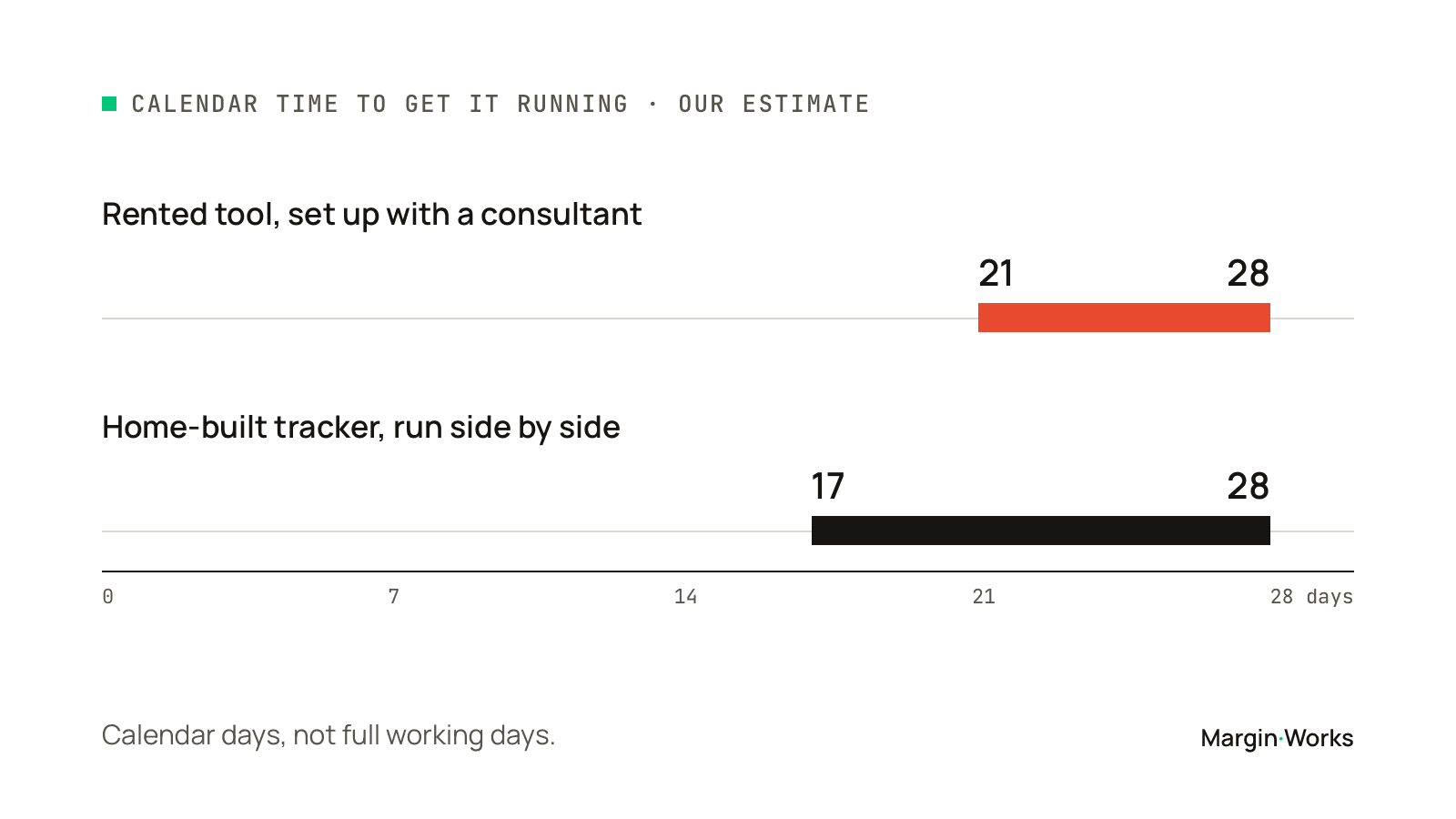
Cost and time
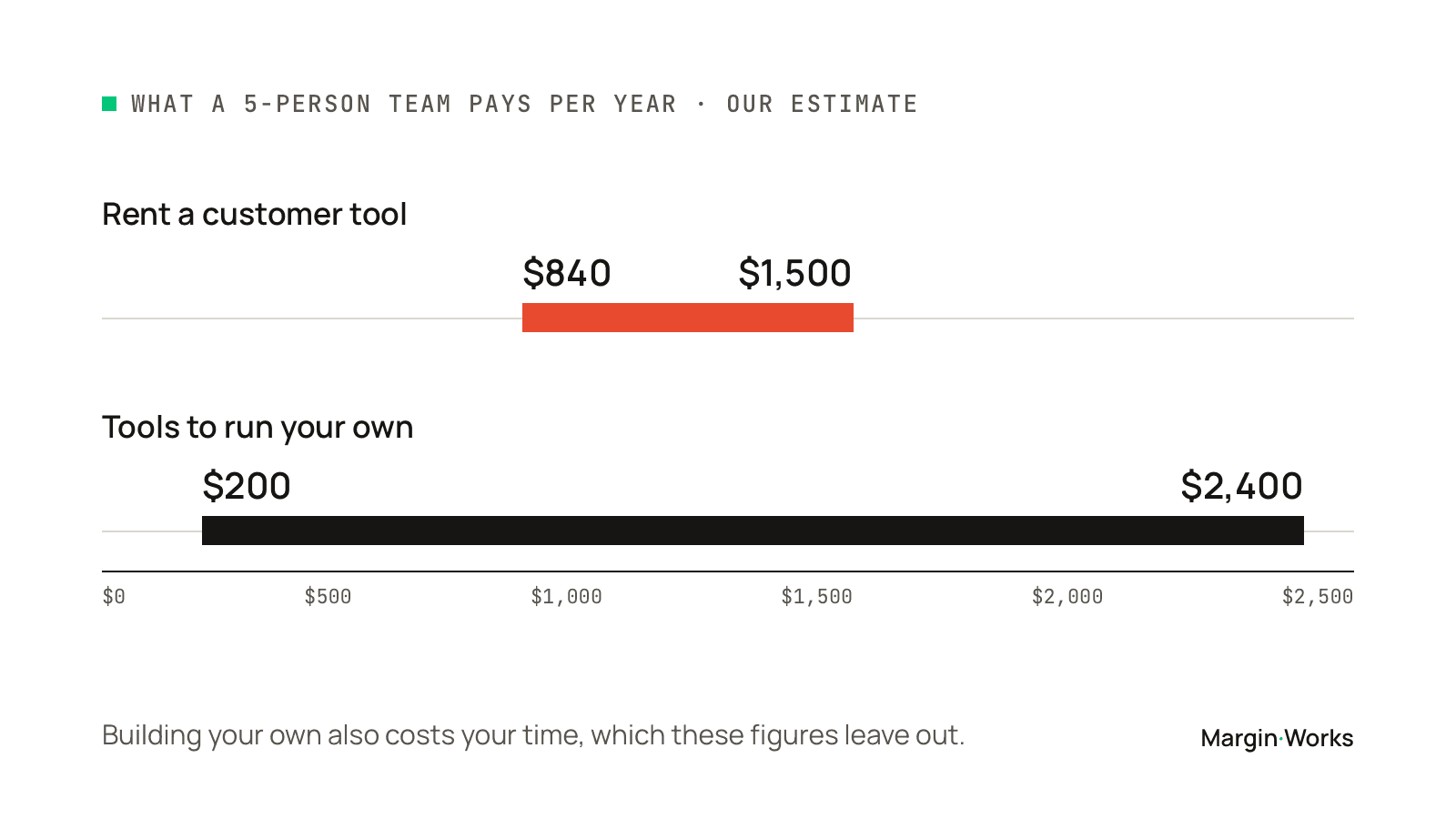
These are our estimates, built from vendors' own price pages when we checked them.
How we checked this
We researched this case up to 2026-10-20. Every number in this report traces to a numbered source below.
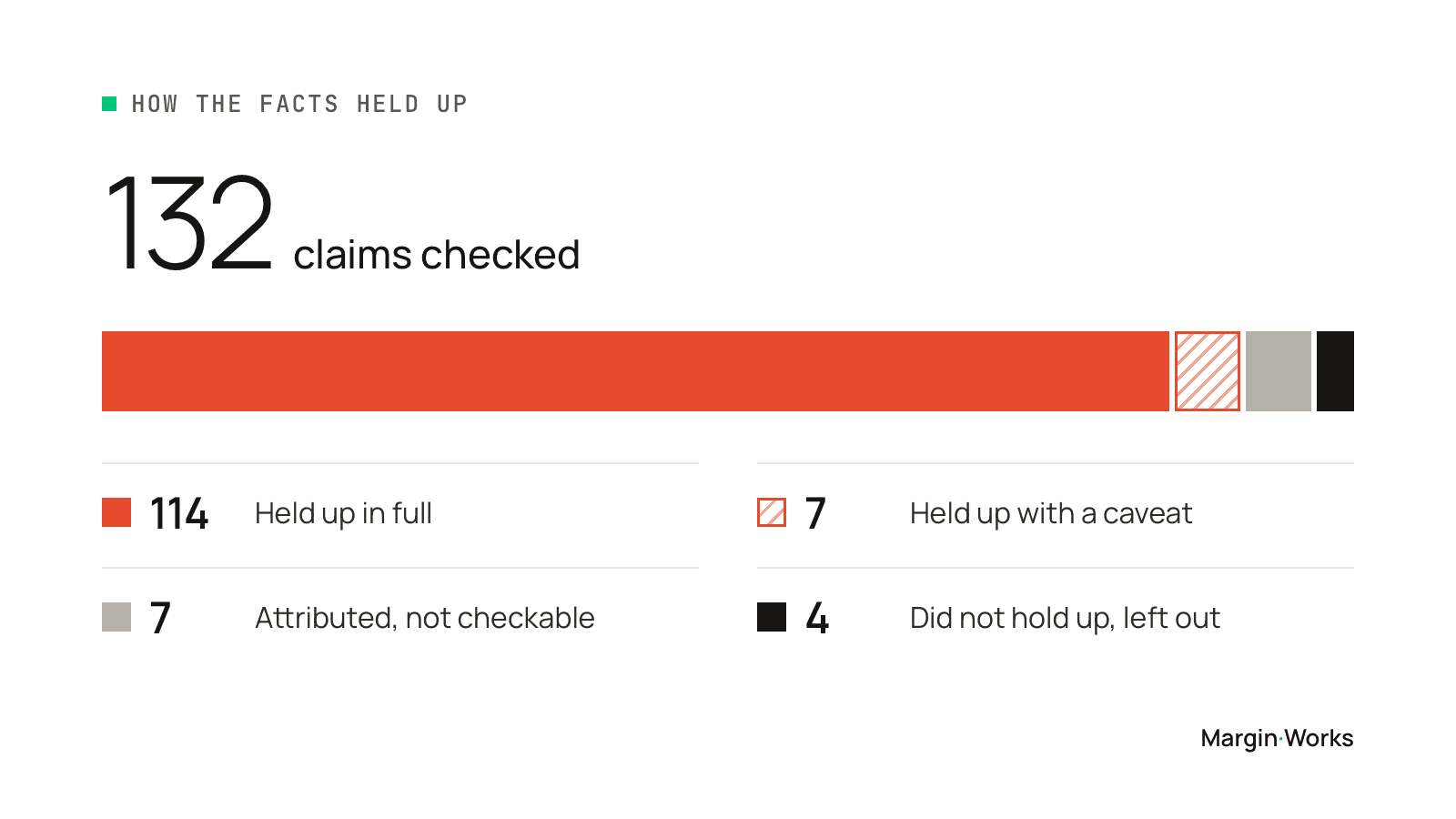
A second, independent pass took each fact back to its original source and checked it. Claims checked: 132.
Two things here are ours, not reported facts: the score in section 3, which grades the outcome for the business over a few years against the best outcome a company making this change could hope for, and the cost and time estimates in section 4, each with its assumptions in its note. Sources cited: 22, of which original sources: 10, and independent of the company's own telling: 15.
Sources
- [1]We Built Our Own Salesforce in Months. Here's Why We're Cancelling the $600K Contract | Curative CEO. 20VC with Harry Stebbings (YouTube) https://www.youtube.com/watch?v=GHRuerXkHlIJuly 18, 2026
- [2]A Letter from our CEO on Curative's $150M Series B Fundraise. Curative https://curative.com/blog/ceo-letter-curative-series-b-fundraiseDecember 2, 2025
- [3]Curative CEO canceled a Salesforce contract after vibecoding a replacement CRM. Startup Fortune https://startupfortune.com/curative-ceo-canceled-a-600000-salesforce-contract-after-vibecoding-a-replacement-crm-in-two-months/Accessed October 20, 2026
- [4]Curative CEO says company ditched a $600k-a-year Salesforce contract after vibecoding a CRM in 2 months. Business Insider (syndicated on Yahoo Finance) https://finance.yahoo.com/technology/ai/articles/curative-ceo-says-company-ditched-090701283.htmlAccessed October 19, 2026
- [5]Salesforce Administrator. Soma Capital Portfolio Jobs https://jobs.somacap.com/companies/curative-2/jobs/36837670-salesforce-administratorAccessed October 20, 2026
- [6]Curative Inc jobs. Trinet Hire (Curative applicant tracking page) https://app.trinethire.com/companies/130621-curative-inc/jobsAccessed October 20, 2026
- [7]Curative press. Curative https://curative.com/pressAccessed October 20, 2026
- [8]Group Health Insurance for Maryland & DC. Curative https://curative.com/lp/maryland-dc-employersAccessed October 20, 2026
- [9]Curative CEO says company ditched a 600K-a-year Salesforce contract after vibecoding a CRM in 2 months. DNYUZ https://dnyuz.com/2026/07/21/curative-ceo-says-company-ditched-a-600k-a-year-salesforce-contract-after-vibecoding-a-crm-in-2-months/July 21, 2026
- [10]Curative ditches Salesforce contract, says AI changes the economics of building software, but CRM warns of security risks. Benzinga (read on Webull) https://www.webull.com/news/15378114213323776Accessed October 20, 2026
- [11]So you vibecoded Salesforce. Activant Capital https://activantcapital.com/research/so-you-vibecoded-salesforceSeptember 8, 2026
- [12]Salesforce's Ultimate Moat: You Can't Vibe Code Infrastructure. Salesforce Ben https://www.salesforceben.com/salesforces-ultimate-moat-you-cant-vibe-code-infrastructure/September 28, 2026
- [13]AI Is Replacing SaaS Faster Than Expected, Curative CEO Says After Canceling $600,000 Salesforce Contract. Tekedia https://www.tekedia.com/ai-is-replacing-saas-faster-than-expected-curative-ceo-says-after-canceling-600000-salesforce-contract/July 21, 2026
- [14]Why Vibe-Coded CRMs Are Not the End of Salesforce. Salesforce Ben https://www.salesforceben.com/why-vibe-coded-crms-are-not-the-end-of-salesforce/July 27, 2026
- [15]Curative, Inc. reviews. Glassdoor https://static.glassdoor.ch/Reviews/Curative-Inc-Reviews-E3509458_P3.htmAccessed October 20, 2026
- [16]How to Build a CRM with AI: Complete 2026 Guide. Questera https://www.questera.ai/blogs/build-crm-with-ai-2026-guideMay 19, 2026
- [17]What you need to know about mandatory reporting of breaches of security safeguards. Office of the Privacy Commissioner of Canada https://priv.gc.ca/en/privacy-topics/business-privacy/safeguards-and-breaches/privacy-breaches/respond-to-a-privacy-breach-at-your-business/gd_pb_201810/Accessed October 20, 2026
- [18]México: la nueva Ley Federal de Protección de Datos Personales en Posesión de los Particulares introduce. Garrigues https://www.garrigues.com/es_ES/noticia/mexico-nueva-ley-federal-proteccion-datos-personales-posesion-particulares-introduceMarch 27, 2025
- [19]Sobre la ley de privacidad de datos en Panamá. Morimor https://morimor.com/es/sobre-la-ley-de-privacidad-de-datos-en-panamaAccessed October 20, 2026
- [20]Free Tools | HubSpot. HubSpot https://www.hubspot.com/pricing/crmAccessed October 20, 2026
- [21]Zoho CRM Pricing and Editions - Free for 3 users. Zoho https://www.zoho.com/crm/zohocrm-pricing.htmlAccessed October 20, 2026
- [22]Supabase pricing. Supabase https://supabase.com/pricingAccessed October 20, 2026
- [23]Our estimate. Yearly cost of renting a customer-tracking tool for 5 people on a cheaper paid plan, the thing a home build would replace. Low is Zoho Standard at 14 per user per month times 5 users times 12 months, which gives 840. High is Salesforce Starter Suite at 25 per user per month times 5 users times 12 months, which gives 1500. Assumptions: All 5 people need a paid seat; free plans cover only fewer users. Annual billing; monthly billing or higher plans cost more. USD list prices on the access date; CAD and MXN amounts were not found. Built from sources [21].
- [24]Our estimate. Yearly cost of the tools to run a home-built customer tracker for 5 people, not counting anyone's time. Low is the Claude Pro annual price of 200 with a free database plan. High is the top of the vendor's 200 per month range times 12 months, which gives 2400. Assumptions: One person builds and maintains it with an AI subscription; no paid freelancer. The high end follows a vendor-written estimate (a company that sells AI builders), so it is the guide's figure, not an official price. Prices are in USD as listed on the vendors' pages on the access date and may change. Built from sources [16].
- [25]Our estimate. Calendar time for one person to get an AI-built customer tracker usable and running side by side with the old tool. Low is the guide's 3 days for a usable first version plus 14 days side by side, which gives 17. High doubles the guide's 7 days for a first-time builder, giving 14, then adds 14 days side by side, which gives 28. Assumptions: Contained scope: contacts, follow-up dates and a simple pipeline for one team. The 3 to 7 day figure is a vendor's estimate; doubling the top is our margin for a first-time builder. Elapsed days, not full working days; the owner's actual hours are not published anywhere we found. Built from sources [16].
- [26]Our estimate. Calendar time to get a bought customer tool set up with a consultant's help, as a comparison. Taken directly from the consultancy's 3 to 4 weeks for a simple single-tool setup with little data to move. Assumptions: Simple setup with minimal data migration; messy data would take longer. The source is a consultancy that sells setup work, so it may run long or short for a team doing it alone.