How Small Businesses Can Leverage AI and Automation in 2026
Why AI Automation Matters for Small Businesses Today
In 2026, AI automation has become a game-changer for small businesses, transforming how they operate, compete, and grow. What used to be the exclusive domain of large corporations with big budgets and IT teams is now within reach for even the smallest companies. This shift is not about adopting technology just because it’s trendy—it’s about solving real challenges like limited resources, tedious manual tasks, and the need for faster, smarter decisions Yuen, 2025.
Modern AI tools have evolved beyond simple chatbots or one-off automation scripts. Today, they integrate deeply across business functions to automate workflows, personalize customer experiences, and deliver actionable insights that help small businesses work more efficiently and effectively Davenport & Bean, 2025.
Cloud-based platforms and AI-powered apps now allow small and mid-size businesses (SMBs) to automate repetitive tasks, reduce administrative overhead, and focus their limited human capital on innovation and customer relationships BizTech Magazine, 2026. However, adopting AI automation also brings new challenges: choosing the right tools, integrating them securely, measuring their impact, and ensuring automation supports—not replaces—human judgment Lovelace and Alzoubi, 2025.
This article explores how small businesses can successfully leverage AI and automation in 2026. We’ll cover the essential system architecture, customer-facing AI applications, balancing automation with human oversight, and the importance of governance and measurement to maximize benefits and minimize risks.
Building a Strong AI Automation Foundation for Small Businesses
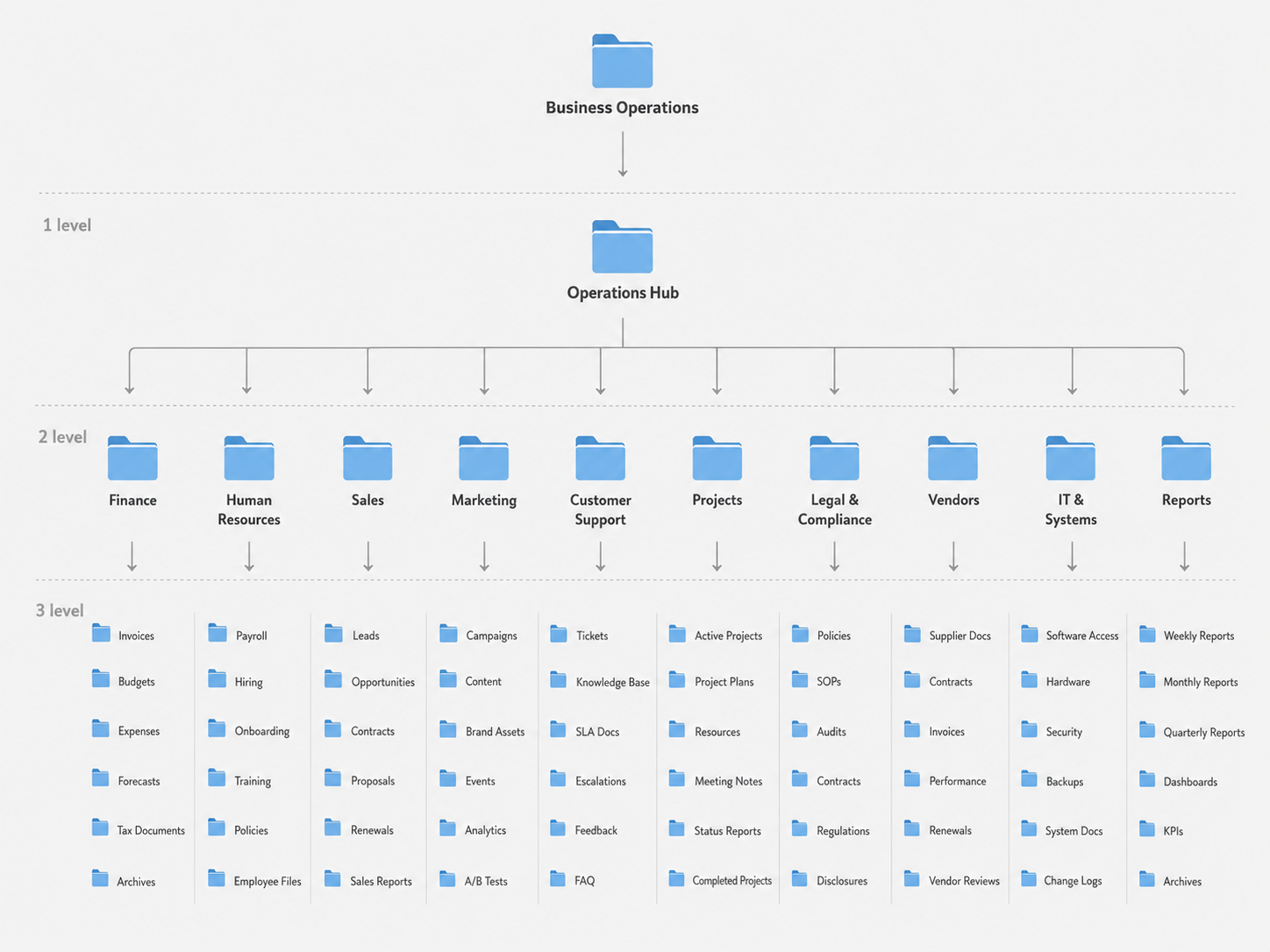
Effective AI automation starts with a solid system architecture—a clear plan for how software, data, and integrations work together to streamline workflows and enable real-time decisions Yuen, 2025. For SMBs, this foundation is critical because it controls where business data lives, how information flows between key systems like invoicing, customer relationship management (CRM), accounting, and document storage, and how manual tasks can be replaced Fujifilm, 2025.
Key Steps to Designing Your Automation Architecture
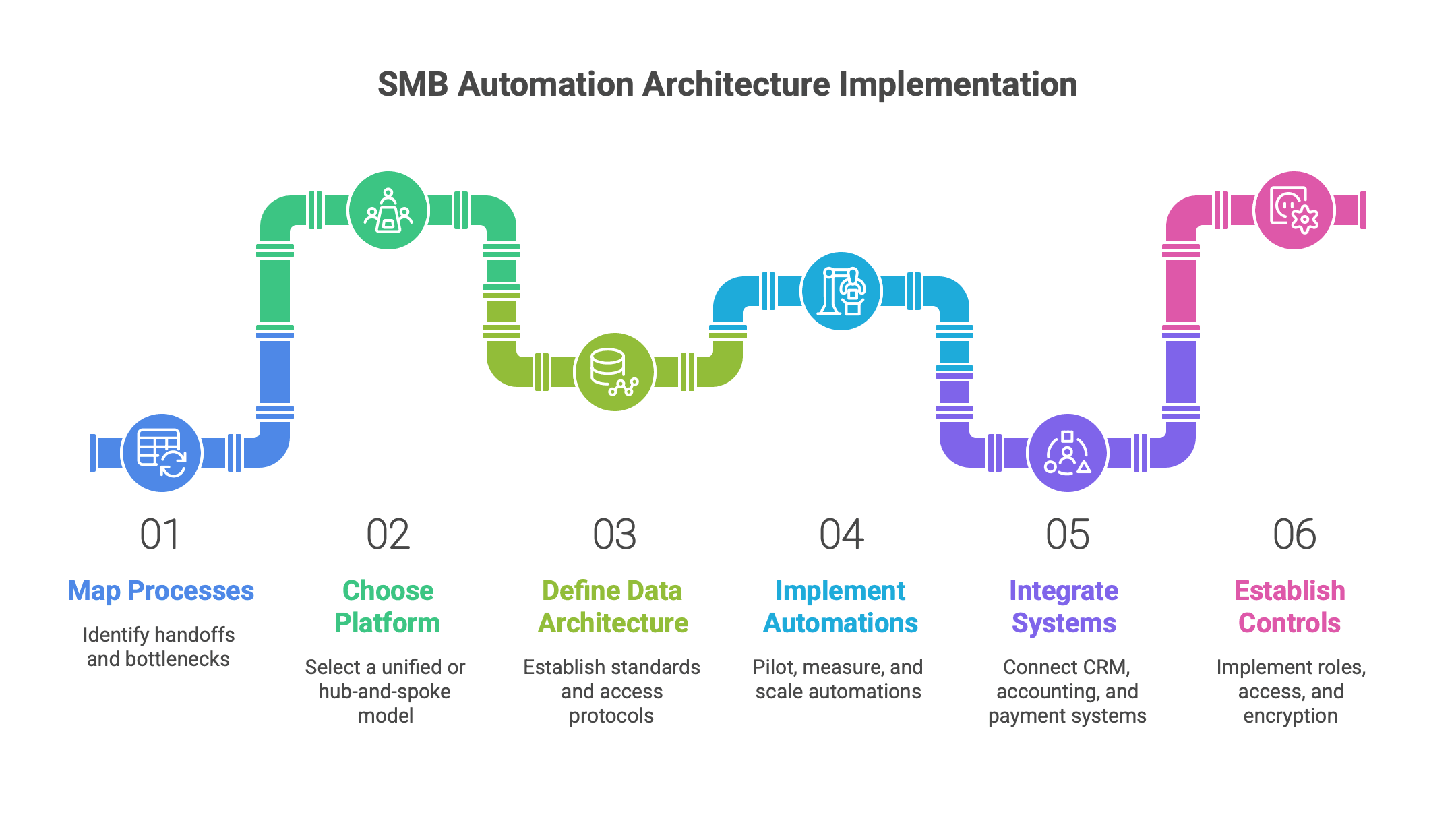
- Map your business processes. Identify manual handoffs, spreadsheet dependencies, and bottlenecks to understand where automation can have the biggest impact Yuen, 2025.
- Choose the right platform. Decide between unified systems or hub-and-spoke models that integrate project, financial, and customer data, ensuring seamless connections with tools like QuickBooks and payment processors Yuen, 2025.
- Define data architecture. Establish standard field names, data ownership, and access controls so team members see only relevant information Yuen, 2025.
- Implement deterministic automations. Use clear IF-THEN rules to trigger tasks, alerts, or transactions, and pilot these in a controlled environment to measure impact and fix errors before full rollout BizTech Magazine, 2026.
Real-World Benefits and Cautions
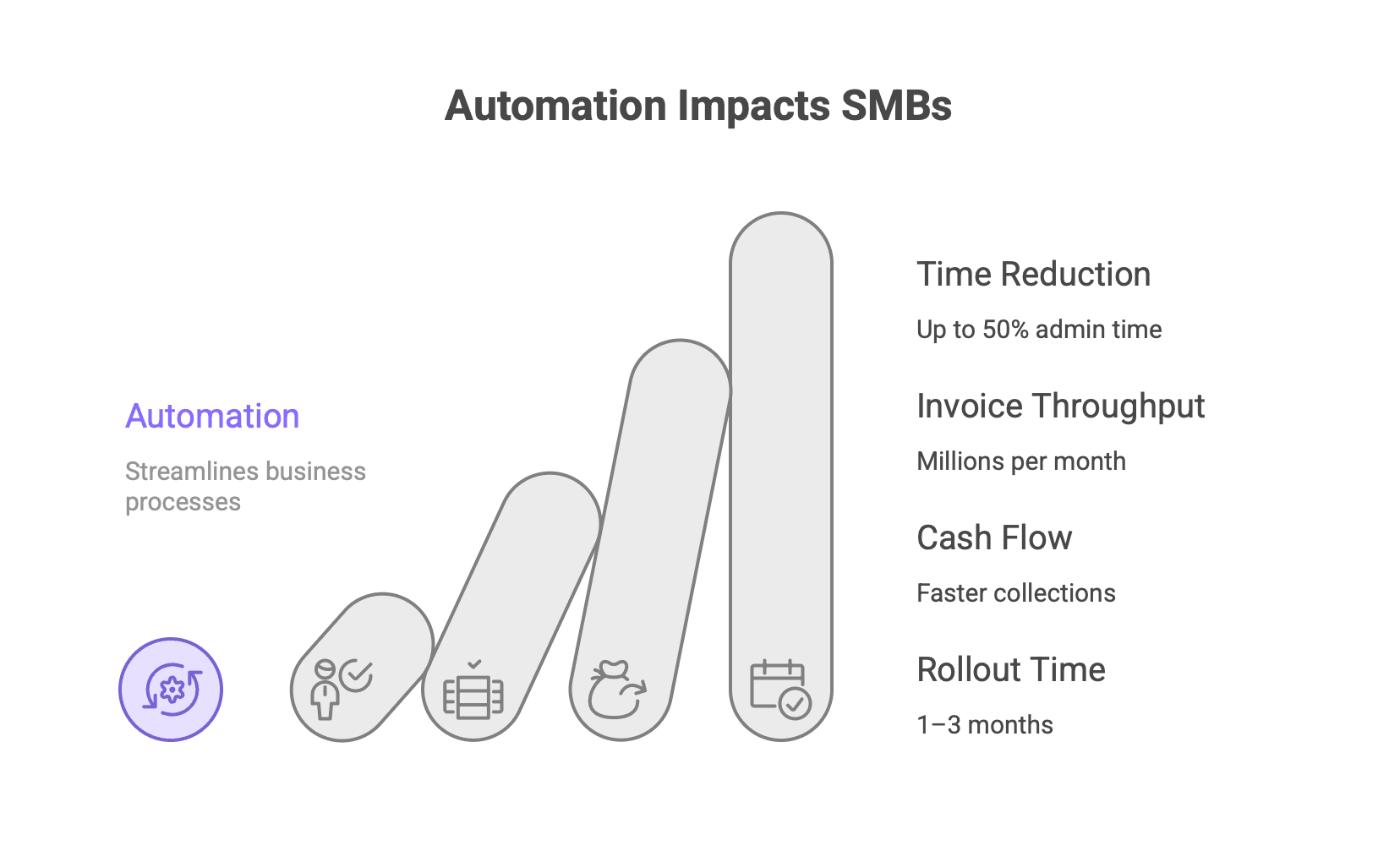
Some small businesses have cut administrative time by up to 50% by mapping and consolidating workflows, freeing staff for higher-value work Yuen, 2025. Others use two-way integrations between payment and accounting systems to process millions in monthly invoices with minimal human effort, speeding up cash flow and reducing errors Yuen, 2025.
However, poor data hygiene or incomplete mapping can undo these gains, causing manual work to creep back in or generating inaccurate results Yuen, 2025. Security is equally important—without encryption and role-based access controls, integrations risk exposing sensitive data Fujifilm, 2025.
The goal is not to add more tools but to connect the right platforms and measure results carefully. Many SMBs can move from pilot to full implementation within one to three months when following disciplined processes BizTech Magazine, 2026.
AI-Powered Customer Interaction: Beyond Chatbots
AI-driven customer interaction is one of the most visible ways small businesses benefit from automation. Today’s AI tools go far beyond basic chatbots. They include support automation and personalization engines that deliver tailored experiences across websites, messaging apps, and CRM systems Tarafdar et al., 2020.
These systems use machine learning and generative AI models to handle routine questions 24/7, create personalized recommendations, and provide predictive insights that guide service routing, inventory management, and marketing actions Chapman Graduate School, 2023.
How AI Customer Interaction Works
- Data ingestion and management: Consolidating high-quality customer data is crucial for effective personalization Tarafdar et al., 2020.
- Model training and selection: Different AI models handle tasks like detecting customer intent, generating responses, and recommending products Tarafdar et al., 2020.
- Real-time inference: AI models run inside applications to respond instantly and consistently across channels.
- Human-in-the-loop escalation: When AI is uncertain, it hands off to a human agent who resolves the issue and helps improve the AI Tarafdar et al., 2020.
Replacing generic chatbot replies with generative AI boosts customer satisfaction and cuts support costs Chapman Graduate School, 2023. Personalization engines can drive up to 35% of revenue through cross-selling and upselling, showing how embedding AI into customer journeys pays off Chapman Graduate School, 2023.
Accessible AI Tools for Small Businesses
Small businesses can tap into these benefits with affordable options like:
- Tidio chatbots for basic customer service
- Free CRM features in HubSpot
- Google Analytics for AI-driven web insights
- Subscription generative AI models for content and conversations Chapman Graduate School, 2023
But success requires more than just plugging in tools. Data governance, organizational change, and ongoing learning are essential to avoid poor model performance and unlock real business value Tarafdar et al., 2020.
AI-powered customer interaction also connects to broader operations like demand forecasting and inventory optimization, transforming jobs and making workforce planning and reskilling vital Chapman Graduate School, 2023.
Balancing Automation with Human Judgment and Oversight
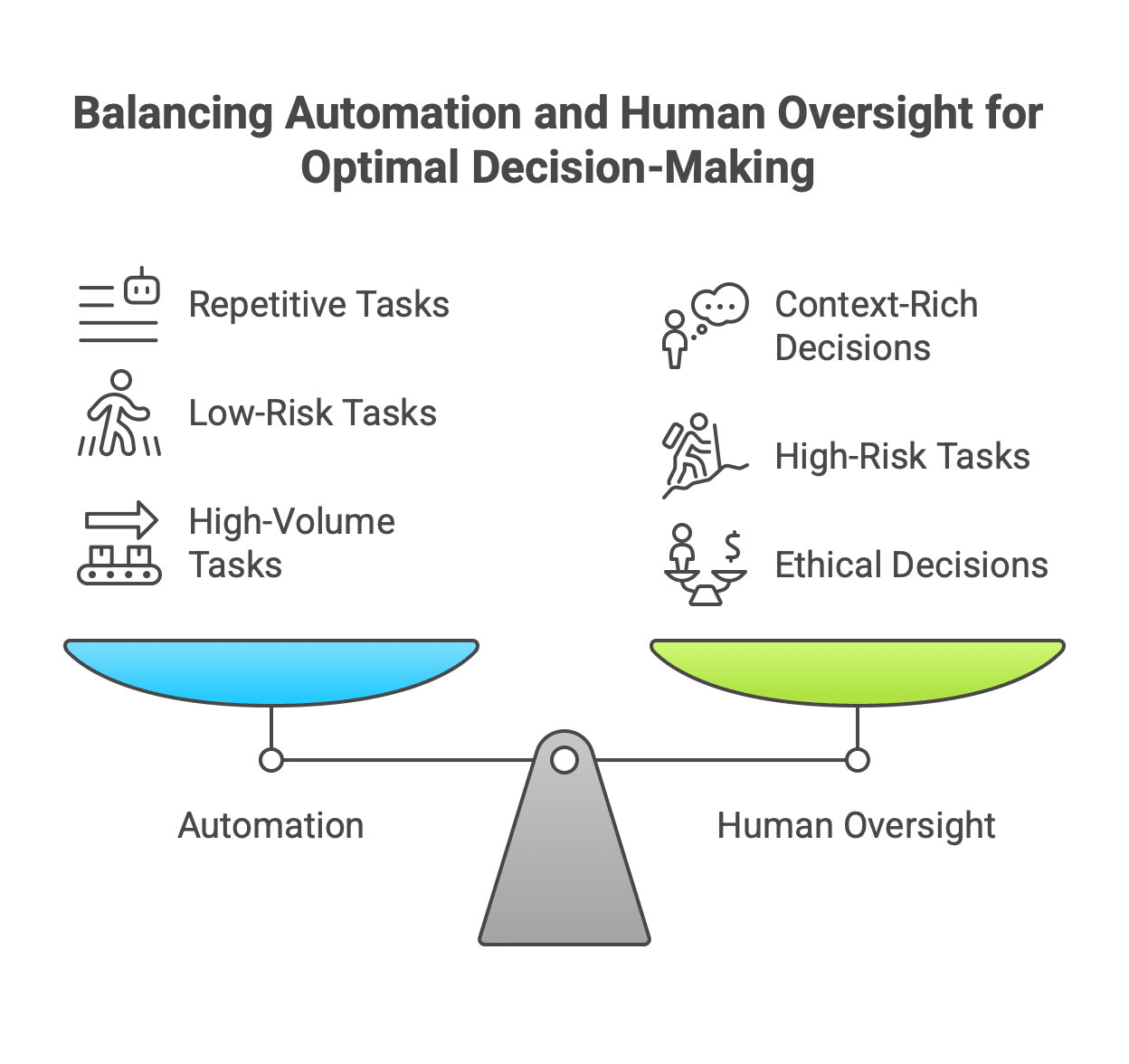
AI automation offers big efficiency gains, but small businesses must balance these with preserving human judgment and organizational learning. Not every task should be fully automated. A thoughtful, risk-aware framework helps decide what to automate and what to keep under human control Lovelace and Alzoubi, 2025.
Framework for Automation Decisions
- Automate repetitive, low-risk tasks.
- Retain human oversight for tasks needing context, ethics, or experience.
- For high-risk areas (regulatory, safety, reputation), require mandatory human reviews and dual auditing (human plus algorithmic) Lovelace and Alzoubi, 2025.
Research shows AI can amplify existing differences in user judgment. For example, an AI assistant based on GPT-4 helped high-performing entrepreneurs increase profits but reduced outcomes for low-performers Melendez, 2025. This underscores the need for training, scenario-based learning, and governance roles that let staff challenge and override AI recommendations Lovelace and Alzoubi, 2025.
Continuous Monitoring and Leadership Support
Ongoing measurement of AI model performance, user engagement, and decision quality is essential. Establish escalation protocols for issues like model drift, hallucination, or bias to keep automation reliable and aligned with business goals Lovelace and Alzoubi, 2025.
Leadership also plays a key role. Viewing AI as an evolving capability rather than a quick fix fosters a culture of experimentation, knowledge sharing, and risk tolerance. Flatter organizational structures and clear communication reduce fear and resistance, enabling frontline employees to refine AI-driven decisions Sayyadi and Collina, 2023.
The goal is to design automation that complements human strengths—preserving opportunities for judgment development and embedding transparency, accountability, and feedback loops Duncan, 2026.
Ensuring Privacy, Security, and Measurable Results
As AI automation becomes central to small business operations, strong governance, privacy, and measurement frameworks are vital to sustain value and comply with evolving regulations UNESCO, 2021.
Four Pillars of Secure AI Data Management
- Input governance: Minimize and inventory data inputs to AI systems.
- Processing governance: Decide where and how data is processed.
- Output governance: Define rules for data retention and auditability.
- Oversight and accountability: Implement governance frameworks and conduct regular reviews UNESCO, 2021.
Small businesses should limit personally identifiable information sent to AI, prefer anonymization, and use encryption and strict access controls when handling sensitive data UNESCO, 2021.
Vendor selection is critical. Many AI providers collect and store user data, sometimes sharing it or retaining it after account deletion The Chicago School University Library, n.d.. SMBs must demand transparency, require security certifications like ISO 27001 or SOC 2, and regularly review vendor practices Daniels, 2025.
Measuring AI Automation Success
Start by documenting baseline performance—task completion times, error rates, and costs—to enable meaningful before-and-after comparisons Bizzuka, 2025.
Tailor success metrics to each use case:
- Content generation: volume and quality
- Customer service: response times and satisfaction
- Analytics: insight accuracy and decision speed Bizzuka, 2025
Adopt a “fail fast, fail small” pilot approach to test AI tools on a limited scale, gather feedback, and iterate before scaling up BizTech Magazine, 2025.
Avoid common mistakes like assuming AI is unbiased, underestimating integration costs, or neglecting explainability and auditability—especially where regulations apply Harvard Gazette, 2020. Governance is an ongoing process, requiring continuous monitoring and adaptation UNESCO, 2021.
Conclusion: A Balanced Approach to AI Automation Success
In 2026, AI automation levels the playing field, enabling small businesses to operate with agility, intelligence, and resilience once reserved for large enterprises. Success depends on disciplined system architecture—mapping workflows, choosing the right platforms, and designing robust data flows—that lets SMBs automate routine work and make real-time decisions confidently Yuen, 2025.
AI-powered customer engagement has redefined how small businesses connect with customers, delivering personalized, around-the-clock experiences that build loyalty and boost revenue Tarafdar et al., 2020.
At the same time, balancing automation with human judgment and oversight is essential. Small businesses that use structured frameworks to decide what to automate, invest in training, and foster a culture of experimentation will unlock the full potential of AI Lovelace and Alzoubi, 2025.
Robust privacy, security, and measurement practices ensure sustainable AI adoption. By minimizing data exposure, choosing trustworthy vendors, and continuously tracking ROI, SMBs can maximize benefits while managing risks and staying compliant UNESCO, 2021.
AI automation is not a magic solution but a powerful enabler. When deployed thoughtfully, it helps small businesses innovate faster, deliver superior value, and thrive in a rapidly evolving digital landscape. The key to success lies in careful planning, disciplined measurement, and integrating technology with human insight and judgment.
Those SMBs that embrace this balanced approach will not only survive but lead in the era of intelligent automation.

Frequently Asked Questions
How can small businesses start using AI automation effectively?
Small businesses should begin by mapping their processes, choosing integrated platforms that connect key systems, and piloting deterministic automations to streamline workflows and measure results before full rollout.
What are the main benefits of AI-powered customer interaction for small businesses?
AI-driven customer interaction delivers personalized experiences, handles routine questions 24/7, and can increase revenue through cross-selling and upselling, all while reducing support costs.
How do you balance automation with human judgment in a small business?
Automate repetitive, low-risk tasks while retaining human oversight for decisions needing context or ethics, and require mandatory human reviews for high-risk areas to ensure quality and accountability.
Is it true that AI automation can replace all manual tasks in a small business?
No, not every task should be fully automated; human judgment remains essential for complex, context-sensitive, or high-risk activities, and a balanced approach maximizes both efficiency and decision quality.
What steps should small businesses take to ensure privacy and security when adopting AI?
Limit sensitive data sent to AI systems, use encryption and strict access controls, demand transparency from vendors, and regularly review privacy and security practices to protect business and customer information.